CAT-00016
Grey saltbush 'Sea of Blue'
Atriplex cinerea 'AT01'
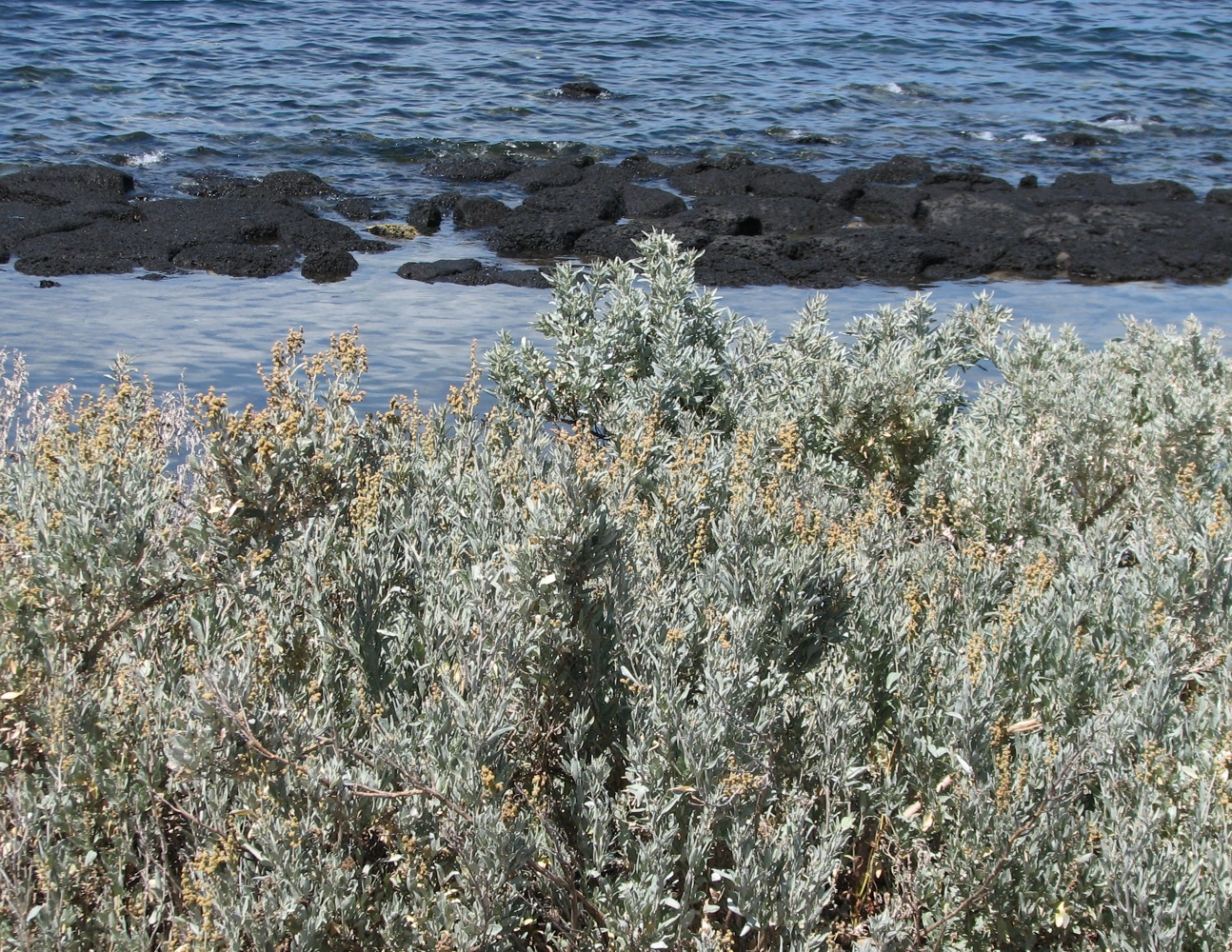
Catalog fields
- Genus
- Atriplex
- Photo
- Not recorded
- Edible
- Yes
- layout
- single
- Habitat
- Species-level information for Atriplex cinerea, not a cultivar/form-specific description. Cultivated selections have no separate wild range. Occurs principally on edge of coastal dunes. Here and there near the sea in stabilised sand etc. on Lord Howe Island (Green 1994).
- Published
- Yes
- Food group
- Leaf vegetable
- Latin name
- Atriplex cinerea 'AT01'
- Fruit photo
- Not recorded
- Plant title
- Grey saltbush 'Sea of Blue'
- Source URLs
- https://profiles.ala.org.au/opus/foa/profile/Atriplex%20cinerea | https://www.australianplantsonline.com.au/atriplex-cinerea.html | https://vicflora.rbg.vic.gov.au/flora/taxon/94c5bd77-1c9b-404a-9c40-aba63242ac9a; https://powo.science.kew.org/taxon/urn%3Alsid%3Aipni.org%3Anames%3A163716-1; https://apps.lucidcentral.org/plants_se_nsw/text/entities/atriplex_cinerea.htm Open source ↗ Open source 2 ↗ Open source 3 ↗ Open source 4 ↗ Open source 5 ↗
- Catalogue ID
- CAT-00016
- Mature width
- About 2 m
- Native range
- Species-level information for Atriplex cinerea, not a cultivar/form-specific description. Cultivated selections have no separate wild range. Found around the south coast of Australia from Geraldton, W.A., to the central coast of N.S.W.; also on Lord Howe Is.
- Plant family
- Amaranthaceae
- Supplier SKU
- ATRCIN
- Listing group
- Original garden variety
- Mature height
- About 0.3 m
- Native states
- NSW, SA, TAS, VIC, WA
- Original list
- Yes
- Research date
- 10/10/2026
- Research notes
- AT01 is the cultivar; Sea of Blue trade name. Fruit description follows VicFlora, correcting supplier 'berries'; cultivar fruiting/sex unverified. Seasons vary with climate, location, cultivar and plant maturity. Native states refer to the parent species, or both parent species for the garden hybrid; the cultivated selection has no separate wild range. Flower descriptions use species-level information where cultivar-specific details are unavailable.
- Evidence status
- Provisional food-use report; confirm before use
- Fruiting season
- Species fruits Oct-Jan in Victoria; timing varies by region
- Background photo
- Not recorded
- Edible component
- Leaves after suitable preparation
- Flowering season
- Spring-summer
- Brief description
- Low spreading silver-grey groundcover; small spring-summer flower clusters.
- Drought tolerance
- Very high; supplier reports severe drought tolerance.
- Preparation notes
- Cultivar-specific food use and preparation not independently verified; retained from original list.
- Flower description
- Tiny flowers; male flowers in rounded clusters on spikes, female flowers in leaf axils; species-level description.
- General cultivation
- General guidance (qualitative): Full sun; drainage; frost hardy; water while establishing; trim spring/autumn.
- Botanical description
- Species-level information for Atriplex cinerea, not a cultivar/form-specific description. Cultivated selections have no separate wild range. Spreading to erect shrub to 1.5 m high, dioecious or monoecious. Leaves thin, shortly petiolate, narrowly elliptic to elliptic or ovate, 2.5–4 cm long, entire, with scurfy sheen on both surfaces. Male flowers in dense glomerules mostly 5–7 mm diam. forming interrupted or continuous spikes or panicles. Female flowers in clusters axillary to upper foliage leaves. Fruiting bracteoles subsessile or shortly stipitate; stipe turbinate, hard; bracteoles ovoid to broadly deltoid or rhomboid, 6–10 mm long and wide, united towards base, often hard and swollen in centre, thin and entire on margin, smooth or with a verrucose appendage on one or both sides. Seed circular; radicle lateral, erect. [See also Green (1994).]
- Other botanical names
- Not recorded
- Attracts birds and bugs
- Wind pollinated; small birds and lizards use dense foliage for shelter.
- Flora of Australia profile
- https://profiles.ala.org.au/opus/foa/profile/Atriplex%20cinerea Open source ↗
- Fruit type and description
- Dry one-seeded fruits within bracteoles; not true berries.
- Flora of Australia citation
- Paul G. Wilson. Atriplex cinerea. Flora of Australia, Australian Biological Resources Study, Department of Climate Change, Energy, the Environment and Water, Canberra. https://profiles.ala.org.au/opus/foa/profile/Atriplex%20cinerea (accessed 2026-10-14). Copyright Commonwealth of Australia; CC BY 4.0 (https://creativecommons.org/licenses/by/4.0/). HTML formatting removed; species-level context added where noted. Open source ↗ Open source 2 ↗
- Flora of Australia retrieved
- 14/10/2026