CAT-00050
Orangeberry
Glycosmis trifoliata
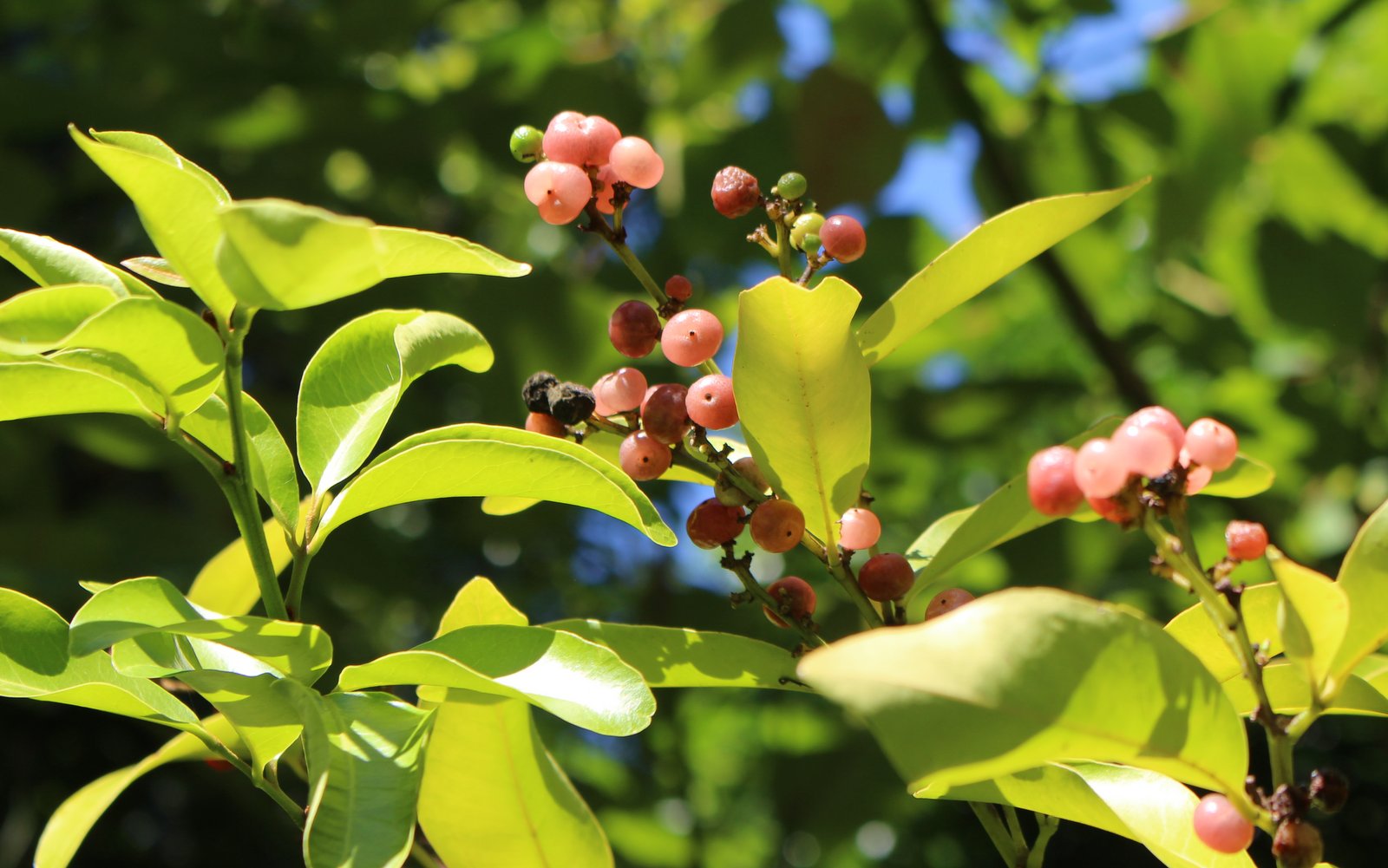
Catalog fields
- Genus
- Glycosmis
- Photo
- Not recorded
- Edible
- Yes
- layout
- single
- Habitat
- Grows in rain forest to deciduous thicket, often common, from rocky coastlines and sand dunes, to 350 m altitude.
- Published
- Yes
- Food group
- Fruit
- Latin name
- Glycosmis trifoliata
- Fruit photo
- Not recorded
- Plant title
- Orangeberry
- Source URLs
- https://profiles.ala.org.au/opus/foa/profile/Glycosmis%20trifoliata | https://tuckerbush.com.au/orangeberry-glycosmis-trifoliata/; https://powo.science.kew.org/taxon/urn%3Alsid%3Aipni.org%3Anames%3A773842-1 Open source ↗ Open source 2 ↗ Open source 3 ↗
- Catalogue ID
- CAT-00050
- Mature width
- 2-3m
- Native range
- Malesia (distribution unclear) to Australia, where found in north Western Australia, Northern Territory, and Queensland as far south as Bundaberg.
- Plant family
- Rutaceae
- Supplier SKU
- Not recorded
- Listing group
- Nursery-listed / regional edible
- Mature height
- 2-6m
- Native states
- QLD, WA
- Original list
- No
- Research date
- 10/10/2026
- Research notes
- Profile enriched from botanical/nursery sources. Dimensions are unpruned regional estimates where available; missing measurements remain explicit. Seasons are regional guides and vary with climate, location, cultivar and plant maturity. Drought and cultivation guidance are qualitative garden inferences, not measured ratings.
- Evidence status
- Nursery food-use source; preparation detail review pending
- Fruiting season
- After flowering
- Background photo
- Not recorded
- Edible component
- Ripe fruit pulp
- Flowering season
- Late spring reported by nursery.
- Brief description
- Tropical shrub or small tree related to citrus.
- Drought tolerance
- Low to moderate; maintain moisture.
- Preparation notes
- Use correctly identified ripe pink fruit; confirm species and seed handling.
- Flower description
- Small fragrant white flowers in clusters.
- General cultivation
- General guidance (qualitative): Trial warm frost-protected shelter; useful butterfly host.
- Botanical description
- Tree or shrub to 5 m high. Twigs drying pale. Leaves imparipinnate, (1) 3 (5, 6)-foliolate, to 19 cm long; leaflets alternate, ovate to elliptic, 5–13.5 cm long, 2.3–6.5 cm wide (apical one usually larger), subcuneate and weakly asymmetric at base, entire to subcrenulate, acute to acuminate, with c. 12 veins on each side. Inflorescence a congested axillary to apparently terminal thyrse of scented flowers; axis to 35 mm long, ferruginous; pedicels c. 1 mm long; bracts and bracteoles triangular, c. 0.5–1 mm long. Sepals triangular, c. 1 mm long, puberulous, ciliate. Petals elliptic-ovate, c. 5 mm long, white or creamy yellow, sparsely hairy. Stamens 2.5–4.5 mm long; anthers elliptic, glandular. Ovary (2) 3 (4)-locular, glabrous; gynophore glabrous. Berry spherical, c. 9–12 mm diam., with persistent style, pink, fleshy, 1- or 2-seeded.
- Other botanical names
- Not recorded
- Attracts birds and bugs
- Native bees and insects visit flowers; canopy shelters birds.
- Flora of Australia profile
- https://profiles.ala.org.au/opus/foa/profile/Glycosmis%20trifoliata Open source ↗
- Fruit type and description
- Small pink juicy berry-like fruits.
- Flora of Australia citation
- D.J. Mabberley. Glycosmis trifoliata. Flora of Australia, Australian Biological Resources Study, Department of Climate Change, Energy, the Environment and Water, Canberra. https://profiles.ala.org.au/opus/foa/profile/Glycosmis%20trifoliata (accessed 2026-10-14). Copyright Commonwealth of Australia; CC BY 4.0 (https://creativecommons.org/licenses/by/4.0/). HTML formatting removed; species-level context added where noted. Open source ↗ Open source 2 ↗
- Flora of Australia retrieved
- 14/10/2026