CAT-00084
Yam daisy
Microseris lanceolata
Catalog fields
- Genus
- Microseris
- Photo
- Not recorded
- Edible
- Yes
- layout
- single
- Habitat
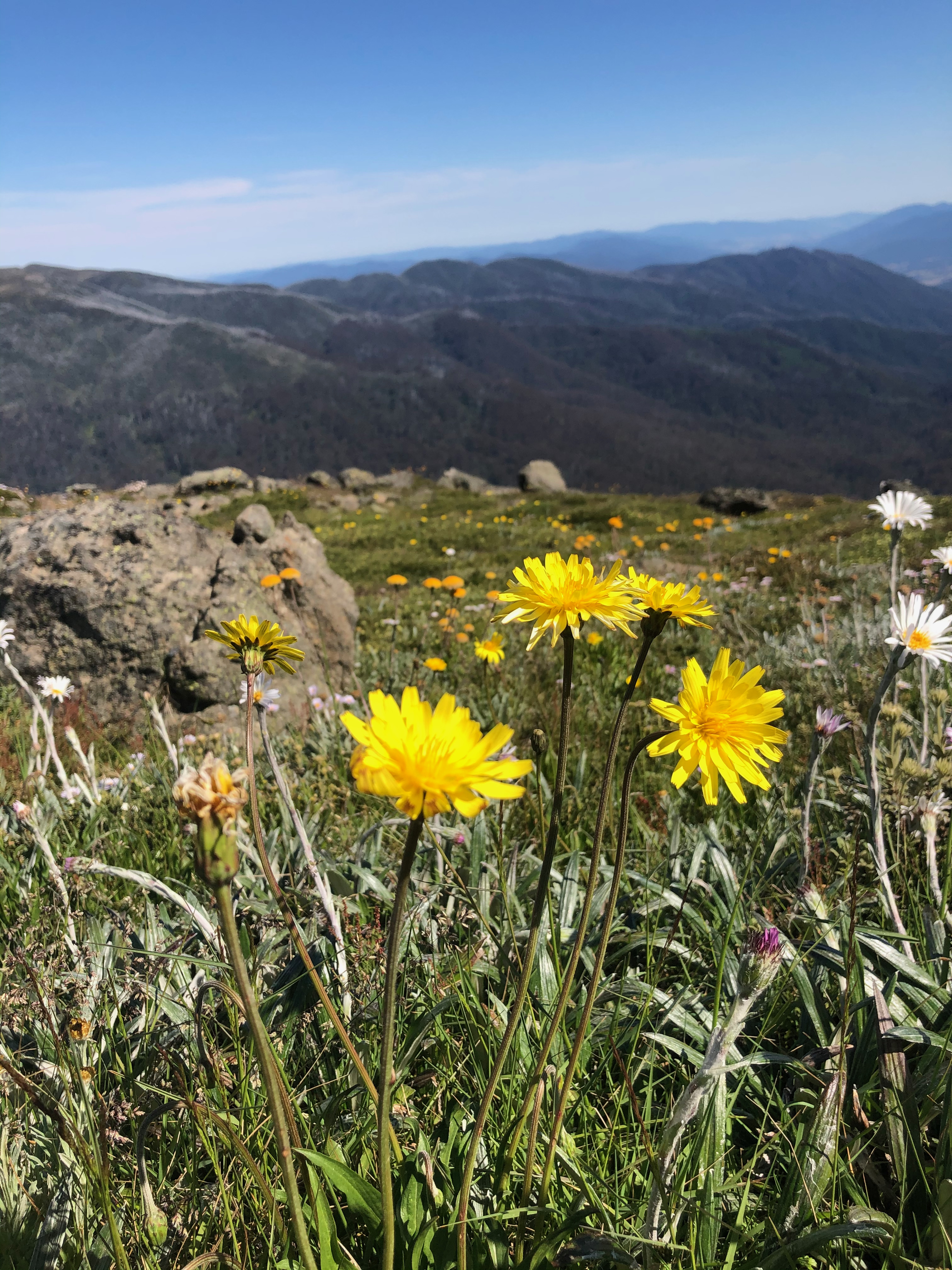
- Grows in grassy eucalypt woodland, tussock grassland with scattered shrubs, alpine grassland and herbfield, often wet areas, to c. 2210 m alt.
- Published
- Yes
- Food group
- Root / tuber
- Latin name
- Microseris lanceolata
- Fruit photo
- Not recorded
- Plant title
- Yam daisy
- Source URLs
- https://profiles.ala.org.au/opus/foa/profile/Microseris%20lanceolata | https://tuckerbush.com.au/plants/vegetable-plants/; https://tuckerbush.com.au/murnong-yam-daisy-microseris-lanceolata/; https://vicflora.rbg.vic.gov.au/flora/taxon/86db3654-6285-401a-aaac-ffbdada19569 Open source ↗ Open source 2 ↗ Open source 3 ↗ Open source 4 ↗
- Catalogue ID
- CAT-00084
- Mature width
- Not confirmed; allow spread appropriate to growth habit
- Native range
- Occurs in southeastern Australia in alpine and subalpine areas of New South Wales, Australian Capital Territory, Victoria and Tasmania. [The distribution map generated by the Australasian Virtual Herbarium (accessed September 2020) includes records that are likely to be Microseris walteri which was previously included in M. lanceolata.]
- Plant family
- Asteraceae
- Supplier SKU
- Not recorded
- Listing group
- Nursery-listed / regional edible
- Mature height
- Not confirmed; habit described in brief description
- Native states
- NSW, TAS, VIC
- Original list
- No
- Research date
- 10/10/2026
- Research notes
- Older murnong sources may conflate this species with Microseris walteri; confirm nursery identity. Profile enriched from botanical/nursery sources. Dimensions are unpruned regional estimates where available; missing measurements remain explicit. Seasons are regional guides and vary with climate, location, cultivar and plant maturity. Drought and cultivation guidance are qualitative garden inferences, not measured ratings. Native states use the narrower current VicFlora species concept; Kew retains a broader distribution.
- Evidence status
- Nursery food-use source; preparation detail review pending
- Fruiting season
- Seed after flowering.
- Background photo
- Not recorded
- Edible component
- Tuberous roots
- Flowering season
- December-March in current VicFlora; regional timing varies.
- Brief description
- Montane yam daisy with yellow flowers and tuberous roots.
- Drought tolerance
- Rating not verified; maintain moisture during growth.
- Preparation notes
- Confirm species; older murnong accounts may describe Microseris walteri. Follow species-specific tuber preparation.
- Flower description
- Yellow flower heads resembling small dandelions.
- General cultivation
- General guidance (qualitative): Challenging warm-climate trial; confirm species rather than relying on a generic murnong label.
- Botanical description
- Perennial herb; underground stem sympodial, erect, 3–25 mm long; roots several, tuberous to narrowly cylindric-tapering, sometimes producing adventitious shoots. Leaves all basal, linear to narrowly lanceolate or oblanceolate, 5–35 cm long, 2–20 mm wide, entire to dentate or pinnatifid. Scapes unbranched, naked, 10–60 cm long; capitula 20–60-flowered; involucre 10–25 mm long; outer bracts subequal, usually calyculate; inner bracts elongate, ±equal. Florets: ligules yellow; outer ligules 10–20 mm long and usually well-exceeding involucre. Achenes slender, straight, 4–12 mm long. Pappus parts 8–30, ±equal, each with a basal scale 3–12 mm long, 0.3–1.3 mm wide tapering into a scabrid to subplumose awn. [Editorial note, 27 August 2020: this description from the Flora of Australia Volume 37 (Sneddon 2015) may include elements of Microseris walteri Gand. which was treated as a synonym of M. lanceolata at that time; see Walsh (2016).]
- Other botanical names
- Not recorded
- Attracts birds and bugs
- Native bees and insects visit flowers; canopy shelters birds.
- Flora of Australia profile
- https://profiles.ala.org.au/opus/foa/profile/Microseris%20lanceolata Open source ↗
- Fruit type and description
- Dry achenes with pappus hairs; roots are the food crop.
- Flora of Australia citation
- B.V. Sneddon. Microseris lanceolata. Flora of Australia, Australian Biological Resources Study, Department of Climate Change, Energy, the Environment and Water, Canberra. https://profiles.ala.org.au/opus/foa/profile/Microseris%20lanceolata (accessed 2026-10-14). Copyright Commonwealth of Australia; CC BY 4.0 (https://creativecommons.org/licenses/by/4.0/). HTML formatting removed; species-level context added where noted. Open source ↗ Open source 2 ↗
- Flora of Australia retrieved
- 14/10/2026