CAT-00108
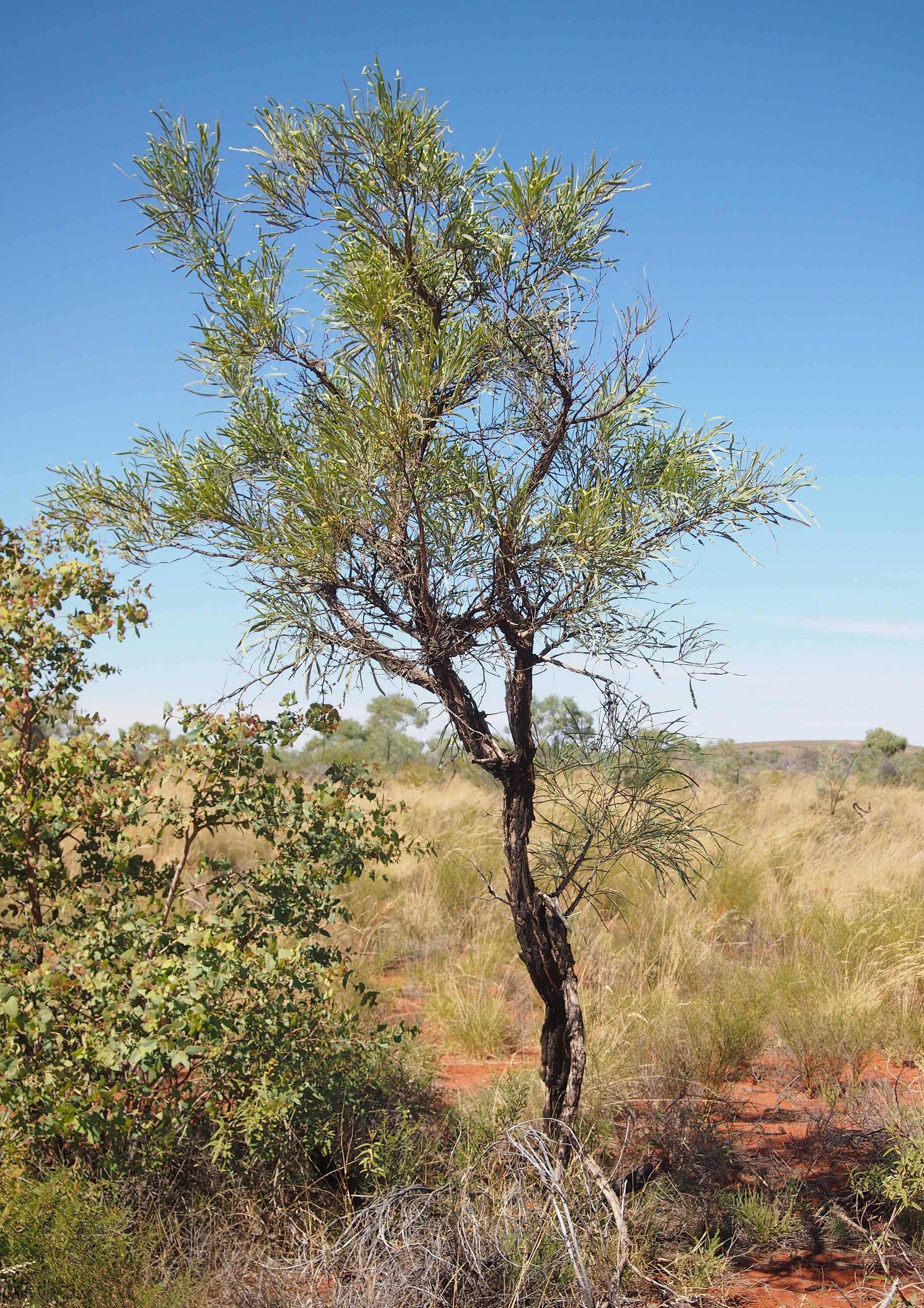
Dogwood wattle
Acacia coriacea
Catalog fields
- Genus
- Acacia
- Photo
- photos/CAT-00108-A.jpg
- Edible
- Yes
- layout
- single
- Habitat
- Not recorded
- Published
- Yes
- Food group
- Nut / seed
- Latin name
- Acacia coriacea
- Fruit photo
- photos/CAT-00108-F.jpg
- Plant title
- Dogwood wattle
- Source URLs
- https://profiles.ala.org.au/opus/foa/profile/Acacia%20coriacea | https://www.fao.org/4/x0963e/x0963e0c.htm; https://plantnet.rbgsyd.nsw.gov.au/cgi-bin/NSWfl.pl?lvl=sp&name=Acacia~coriacea&page=nswfl; https://powo.science.kew.org/taxon/urn%3Alsid%3Aipni.org%3Anames%3A470054-1; https://florabase.dbca.wa.gov.au/browse/profile/13502 Open source ↗ Open source 2 ↗ Open source 3 ↗ Open source 4 ↗ Open source 5 ↗
- Catalogue ID
- CAT-00108
- Mature width
- Not confirmed; allow spread appropriate to growth habit
- Native range
- Endemic to northwestern Western Australia.
- Plant family
- Fabaceae
- Supplier SKU
- Not recorded
- Listing group
- Regional / traditional food plant
- Mature height
- Up to 10 m
- Native states
- NT, WA
- Original list
- No
- Research date
- 10/10/2026
- Research notes
- Profile enriched from botanical/nursery sources. Dimensions are unpruned regional estimates where available; missing measurements remain explicit. Seasons are regional guides and vary with climate, location, cultivar and plant maturity. Drought and cultivation guidance are qualitative garden inferences, not measured ratings.
- Evidence status
- Published food use; preparation detail review pending
- Fruiting season
- Species-specific period not yet confirmed.
- Background photo
- Not recorded
- Edible component
- Processed mature seeds
- Flowering season
- March-August in WA flora; distinguish the current species from older broad treatments.
- Brief description
- Variable wattle shrub or tree with leathery phyllodes.
- Drought tolerance
- High once established.
- Preparation notes
- Species-specific edible seed use; mature seeds generally processed/roasted. Do not generalise to other wattles.
- Flower description
- Yellow to cream flowers; shape needs confirmation under the current species concept.
- General cultivation
- General guidance (qualitative): Specialist trial in sunny drainage; identify subspecies and avoid wet roots.
- Botanical description
- Spreading shrub or tree 1–10 m high. Bark thin, fibrous and longitudinally fissured. Young new growth yellow-green sericeous. Branchlets sometimes pendulous, slightly angular to terete, glabrous to minutely sericeous. Phyllodes linear to very narrowly elliptic, ± straight to shallowly arcuate, flat, 9–23 (–30) cm long, 1–7 (–8) mm wide, acute to acuminate, coriaceous to rigid-coriaceous, occasionally subglabrous to sericeous between numerous closely parallel fine veins. Inflorescences mostly 1- or 2-headed racemes; raceme axes minute, rarely to 6 mm long; peduncles 3–10 (–13) mm long, sericeous, sometimes glabrous when in pod; heads globular, 3–8 mm diam., 15–50-flowered, pale lemon yellow to cream-coloured. Flowers 5-merous; sepals ½–¾-united. Pods moniliform, irregularly curved before dehiscence, twisted and/or openly coiled or openly curved, to 32 cm long, 5–13 mm wide, coriaceous, longitudinally veined, normally minutely appressed-puberulous. Seeds longitudinal, broadly elliptic, 4–8 mm long, black, glossy; aril large, bright orange.
- Other botanical names
- Not recorded
- Attracts birds and bugs
- Native bees and insects visit flowers; canopy shelters birds.
- Flora of Australia profile
- https://profiles.ala.org.au/opus/foa/profile/Acacia%20coriacea Open source ↗
- Fruit type and description
- Dry pods; mature seeds require appropriate processing.
- Flora of Australia citation
- R.S. Cowan, B.R. Maslin & J.E. Reid. Acacia coriacea. Flora of Australia, Australian Biological Resources Study, Department of Climate Change, Energy, the Environment and Water, Canberra. https://profiles.ala.org.au/opus/foa/profile/Acacia%20coriacea (accessed 2026-10-14). Copyright Commonwealth of Australia; CC BY 4.0 (https://creativecommons.org/licenses/by/4.0/). HTML formatting removed; species-level context added where noted. Open source ↗ Open source 2 ↗
- Flora of Australia retrieved
- 14/10/2026