CAT-00136
Curly Mitchell grass
Astrebla lappacea
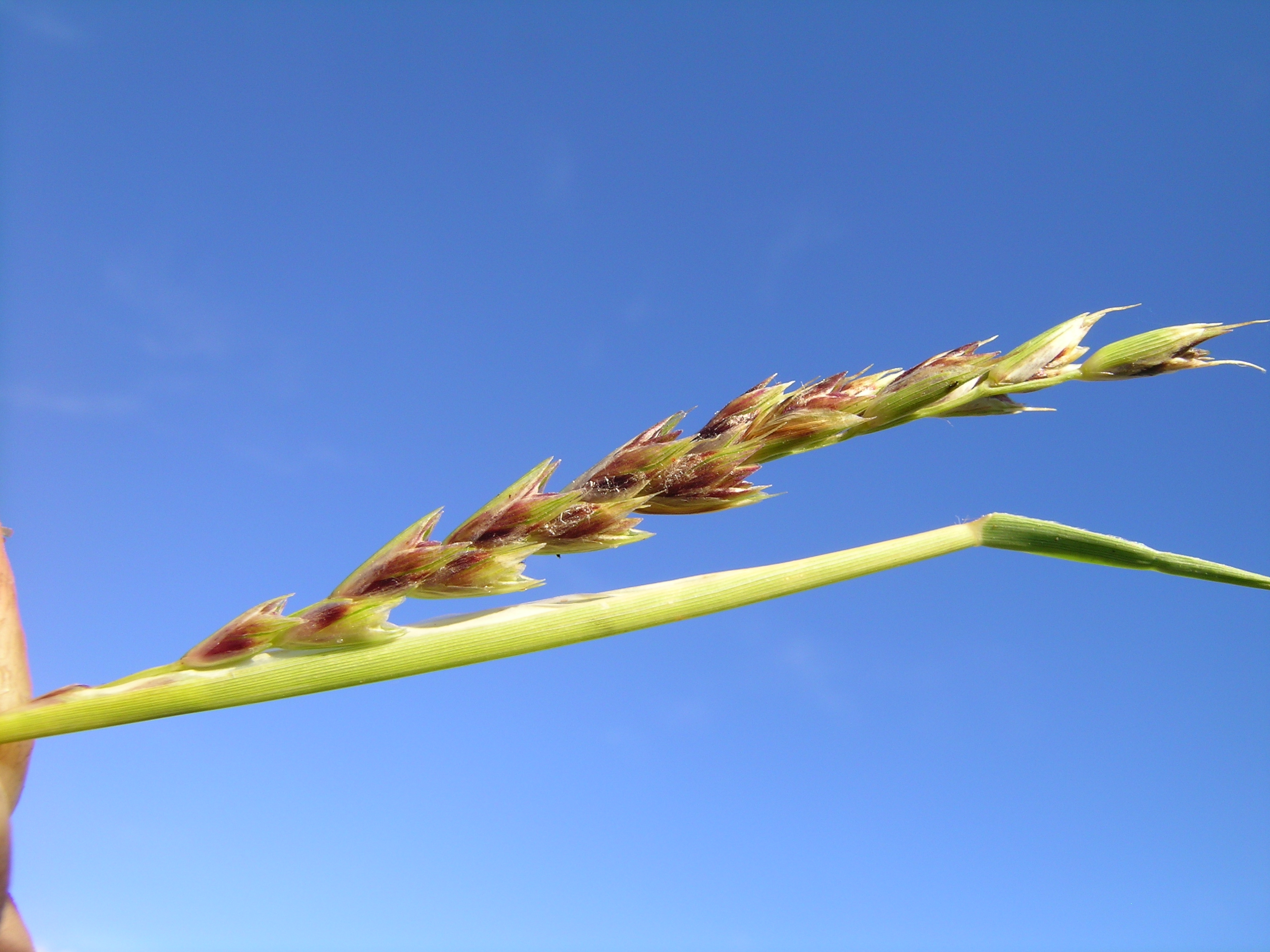
Catalog fields
- Genus
- Astrebla
- Photo
- Not recorded
- Edible
- Yes
- layout
- single
- Habitat
- Not recorded
- Published
- Yes
- Food group
- Grain
- Latin name
- Astrebla lappacea
- Fruit photo
- Not recorded
- Plant title
- Curly Mitchell grass
- Source URLs
- https://profiles.ala.org.au/opus/foa/profile/Astrebla%20lappacea | https://pmc.ncbi.nlm.nih.gov/articles/PMC10660417/; https://plantnet.rbgsyd.nsw.gov.au/cgi-bin/NSWfl.pl?lvl=sp&name=Astrebla~lappacea&page=nswfl Open source ↗ Open source 2 ↗ Open source 3 ↗
- Catalogue ID
- CAT-00136
- Mature width
- Not confirmed; allow spread appropriate to growth habit
- Native range
- Occurs in inland areas of eastern Australia N of 36°S (excluding Cape York Peninsula), and the channel country of SW Qld and NE S.A., with isolated reports from the Pilbara area of W.A. It is sparsely present in the SE corner of the N.T. Only localised, disjunct colonies of A. lappacea occur in central Australia, mainly in gilgais and depressions on cracking clay soils with A. pectinata grasslands and Acacia cambagei (Gidgee). Astrebla lappacea dominates large areas in central and north-central Qld, while in southern Qld and in N.S.W. it is sometimes locally dominant but more often mixed with A. pectinata and other grasses such as Panicum, Bothriochloa and Aristida.
- Plant family
- Poaceae
- Supplier SKU
- Not recorded
- Listing group
- Regional / traditional food plant
- Mature height
- Up to 0.9 m
- Native states
- NSW, NT, QLD, SA, WA
- Original list
- No
- Research date
- 10/10/2026
- Research notes
- Profile enriched from botanical/nursery sources. Dimensions are unpruned regional estimates where available; missing measurements remain explicit. Seasons are regional guides and vary with climate, location, cultivar and plant maturity. Drought and cultivation guidance are qualitative garden inferences, not measured ratings.
- Evidence status
- Published food use; preparation detail review pending
- Fruiting season
- Seed maturity follows rainfall-triggered flowering.
- Background photo
- Not recorded
- Edible component
- Processed grain
- Flowering season
- Responds to rain or flooding.
- Brief description
- Tufted perennial grass with curly dried leaves.
- Drought tolerance
- High once established.
- Preparation notes
- Clean and process mature grain; milling and cooking methods require species-specific confirmation.
- Flower description
- Tiny grass flowers in spikelets arranged along rigid spikes.
- General cultivation
- General guidance (qualitative): Possible sunny grassland trial on suitable soil; grain harvesting and processing needed.
- Botanical description
- Rhizomatous. Culms branching at upper nodes, often semi-weeping at maturity; flowering culms 30–90 cm high. Leaf blades 8–30 cm long, 4–5 mm wide. Inflorescences 5–30 cm long, 0.5–1.3 cm wide. Spikelets subsessile (usually appressed to the rachis for about half their length), 8–18 mm long, 2.5–5 mm wide (excluding awns), 4–6-flowered, usually with 2 bisexual florets. Glumes: lower glume 4.5–10 mm long, 1–3 (–7)-nerved; upper glume 7–13 mm long, 7–13-nerved. Callus hairs c. 1–2 mm long. Basal lemma oblong, obscurely nerved or with lateral nerves prominent above sinuses, with mostly appressed or erect hairs arising in the lower half on all costal and intercostal regions and extending further up the midlobe and outer margins; body 2–4 mm long; lobes dissimilar in form and length (midlobe with awn longer); midlobe not hooked, tapered into an awn or rigid bristle above palea apex, narrower than lateral lobes near palea apex; lateral lobes 1–1.75 mm wide in midrange, wider above sinus, finely acute, with margins produced into 2 winglike tips (sometimes with a scarious outer margin). Anthers 1.5–2 mm long. Grain pale brown or golden; hilum punctiform.
- Other botanical names
- Not recorded
- Attracts birds and bugs
- Native bees and insects visit flowers; canopy shelters birds.
- Flora of Australia profile
- https://profiles.ala.org.au/opus/foa/profile/Astrebla%20lappacea Open source ↗
- Fruit type and description
- Dry grains within spikelets.
- Flora of Australia citation
- M.E.Nightingale, C.M.Weiller. Astrebla lappacea. Flora of Australia, Australian Biological Resources Study, Department of Climate Change, Energy, the Environment and Water, Canberra. https://profiles.ala.org.au/opus/foa/profile/Astrebla%20lappacea (accessed 2026-10-15). Copyright Commonwealth of Australia; CC BY 4.0 (https://creativecommons.org/licenses/by/4.0/). HTML formatting removed; species-level context added where noted. Open source ↗ Open source 2 ↗
- Flora of Australia retrieved
- 15/10/2026