CAT-00144
Wild orange
Capparis mitchellii
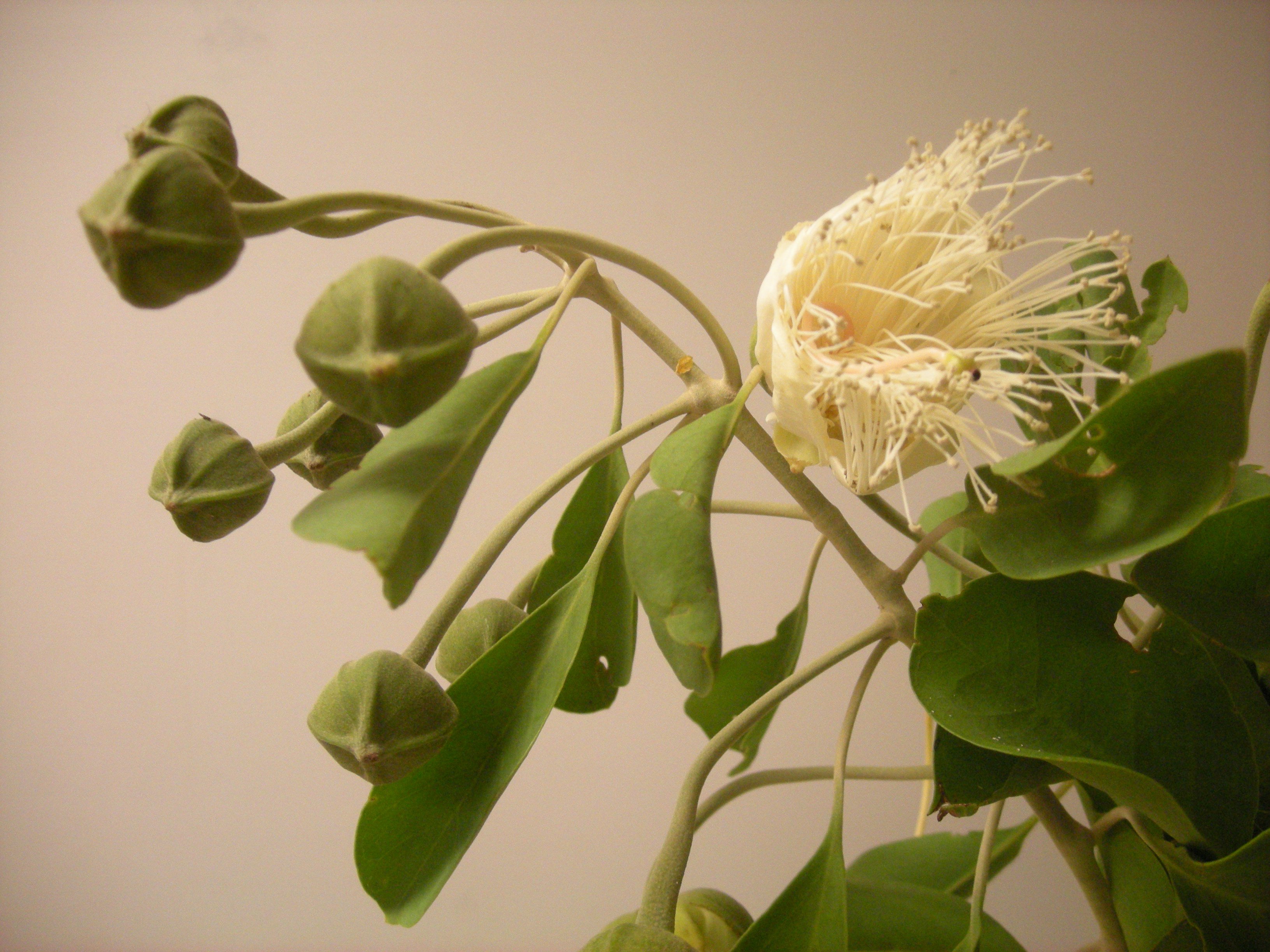
Catalog fields
- Genus
- Capparis
- Photo
- Not recorded
- Edible
- Yes
- layout
- single
- Habitat
- Important food plant for several butterflies (Nicholson & Nicholson 2004: 17).
- Published
- Yes
- Food group
- Fruit
- Latin name
- Capparis mitchellii
- Fruit photo
- Not recorded
- Plant title
- Wild orange
- Source URLs
- https://profiles.ala.org.au/opus/foa/profile/Capparis%20mitchellii | https://plantnet.rbgsyd.nsw.gov.au/cgi-bin/NSWfl.pl?lvl=sp&name=Capparis~mitchellii&page=nswfl Open source ↗ Open source 2 ↗
- Catalogue ID
- CAT-00144
- Mature width
- 3-4 m
- Native range
- Endemic, found in inland regions of all States except Tasmania.
- Plant family
- Capparaceae
- Supplier SKU
- Not recorded
- Listing group
- Regional / traditional food plant
- Mature height
- 3-4 m
- Native states
- NSW, NT, QLD, SA, VIC, WA
- Original list
- No
- Research date
- 10/10/2026
- Research notes
- Profile enriched from botanical/nursery sources. Dimensions are unpruned regional estimates where available; missing measurements remain explicit. Seasons are regional guides and vary with climate, location, cultivar and plant maturity. Drought and cultivation guidance are qualitative garden inferences, not measured ratings.
- Evidence status
- Published food use; preparation detail review pending
- Fruiting season
- After flowering
- Background photo
- Not recorded
- Edible component
- Soft ripe fruit pulp
- Flowering season
- Summer.
- Brief description
- Dry-country shrub or small tree, often spiny when juvenile.
- Drought tolerance
- High once established.
- Preparation notes
- Confirm species identification, the specified edible part, ripeness and species-specific preparation before use.
- Flower description
- Showy cream-yellow flowers with many long stamens.
- General cultivation
- General guidance (qualitative): Promising sunny dry-site trial; allow for spiny juvenile growth.
- Botanical description
- Shrub to tree to 10 m high; hairs simple, curved to appressed. Spines spreading, recurved, 2–4 mm long, absent on adult shoots. Leaves elliptic, acute to obtuse, 3.5–6.5 cm long, 1.2–3.8 cm wide; base acute to decurrent; midrib flat to slightly raised; veins 3–4 pairs, obscure; petiole 6–11 mm long. Inflorescence 1–4-flowered, axillary near top of branch; pedicels 3–4 cm long. Sepals c. 11–18 mm long, outer pair minutely hairy outside; inner pair with a few long hairs inside. Petals 2.5–3 cm long, woolly at base, pale yellow. Stamens c. 120–130. Gynophore 5.5–7.5 cm long, sometimes pubescent towards base; ovary pear-shaped, c. 5 mm long, pubescent; placentas 4 or 5. Fruit globose to ellipsoidal, 3–7.5 cm diam.; pericarp smooth or with irregular wart-like protrusions, hairy to glabrous. Seeds numerous; axis through attachment 7–10 mm long.
- Other botanical names
- Not recorded
- Attracts birds and bugs
- Native bees and insects visit flowers; canopy shelters birds.
- Flora of Australia profile
- https://profiles.ala.org.au/opus/foa/profile/Capparis%20mitchellii Open source ↗
- Fruit type and description
- Round fleshy fruit with many seeds; flavour varies and can be poor.
- Flora of Australia citation
- H.J. Hewson. Capparis mitchellii. Flora of Australia, Australian Biological Resources Study, Department of Climate Change, Energy, the Environment and Water, Canberra. https://profiles.ala.org.au/opus/foa/profile/Capparis%20mitchellii (accessed 2026-10-15). Copyright Commonwealth of Australia; CC BY 4.0 (https://creativecommons.org/licenses/by/4.0/). HTML formatting removed; species-level context added where noted. Open source ↗ Open source 2 ↗
- Flora of Australia retrieved
- 15/10/2026