CAT-00145
Green plum
Buchanania obovata
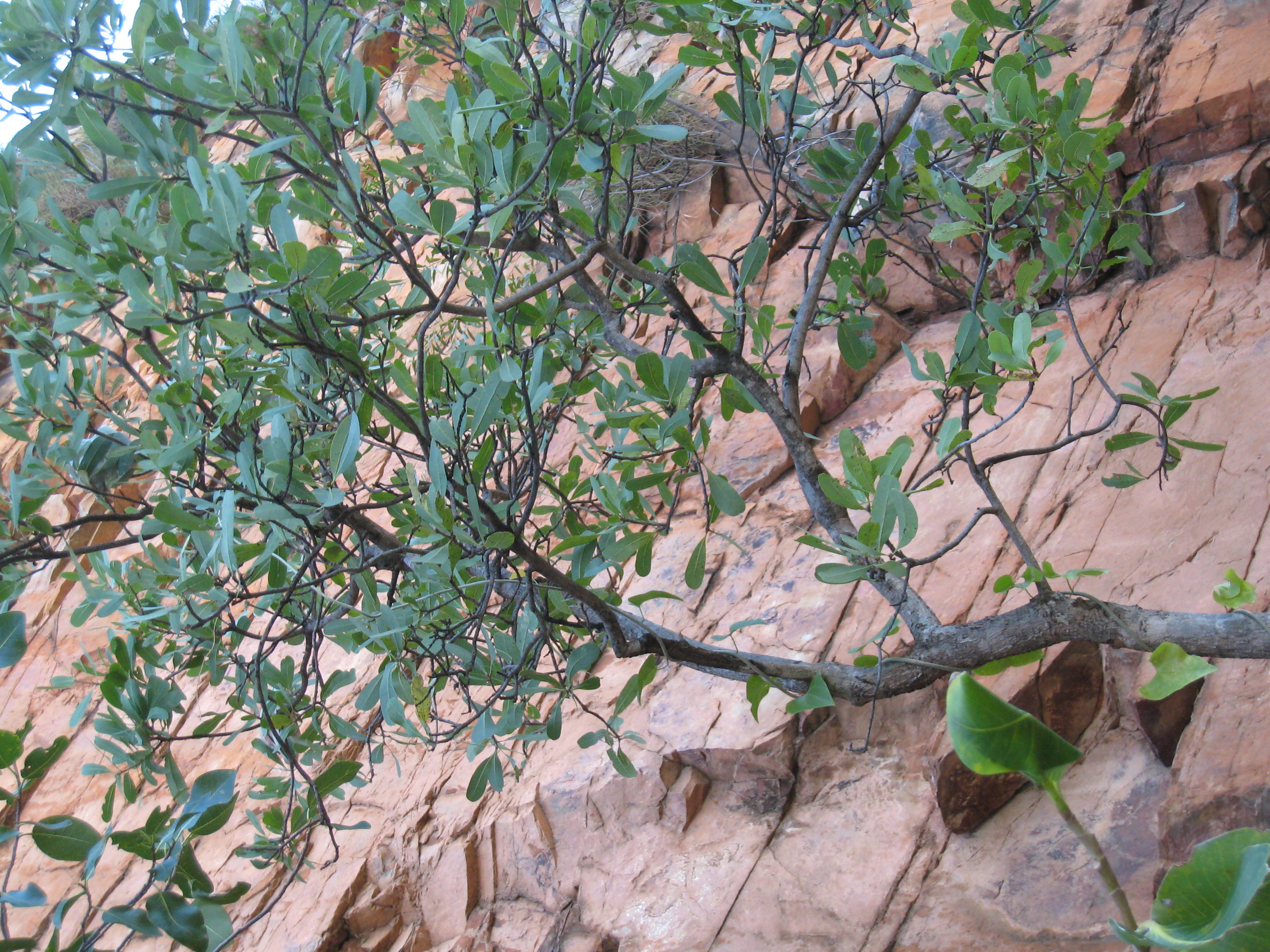
Catalog fields
- Genus
- Buchanania
- Photo
- Not recorded
- Edible
- Yes
- layout
- single
- Habitat
- Mostly in eucalypt or mixed open woodland or forest.
- Published
- Yes
- Food group
- Fruit
- Latin name
- Buchanania obovata
- Fruit photo
- Not recorded
- Plant title
- Green plum
- Source URLs
- https://profiles.ala.org.au/opus/foa/profile/Buchanania%20obovata | https://www.anbg.gov.au/gardens/visiting/exploring/aboriginal-trail/; https://powo.science.kew.org/taxon/69321-1 Open source ↗ Open source 2 ↗ Open source 3 ↗
- Catalogue ID
- CAT-00145
- Mature width
- Not confirmed; allow spread appropriate to growth habit
- Native range
- Occurs in the Kimberley, Western Australia, northern Northern Territory and far northwestern Queensland.
- Plant family
- Anacardiaceae
- Supplier SKU
- Not recorded
- Listing group
- Regional / traditional food plant
- Mature height
- Not confirmed; habit described in brief description
- Native states
- NT, QLD, WA
- Original list
- No
- Research date
- 10/10/2026
- Research notes
- Profile enriched from botanical/nursery sources. Dimensions are unpruned regional estimates where available; missing measurements remain explicit. Seasons are regional guides and vary with climate, location, cultivar and plant maturity. Drought and cultivation guidance are qualitative garden inferences, not measured ratings.
- Evidence status
- Published food use; preparation detail review pending
- Fruiting season
- After flowers
- Background photo
- Not recorded
- Edible component
- Ripe fruit flesh
- Flowering season
- Early wet season in northern Australian account.
- Brief description
- Small tropical woodland tree with broad tough leaves and corky bark.
- Drought tolerance
- Moderate to high after establishment.
- Preparation notes
- Confirm species identification, the specified edible part, ripeness and species-specific preparation before use.
- Flower description
- Small cream-white flowers in sprays on new growth.
- General cultivation
- General guidance (qualitative): Warm frost-free trial; adapted to tropical seasonal conditions.
- Botanical description
- Shrub or tree to 15 m high. Branchlets rusty-villous or tomentose, glabrescent. Leaves obovate to oblong-obovate, obtuse, rounded or sometimes retuse, coriaceous, villous to glabrous; lamina mostly 5–25 cm long, 1.5–8 cm wide; base narrowly cuneate, decurrent; secondary veins mostly 13–21 pairs; tertiary veins scalariform-reticulate; petiole ±laterally ridged, 0.5–1.5 cm long. Panicles to 10 cm, rarely 18 cm long, villous or sparsely pilose; pedicels articulate just below base of calyx, there subtended by an ovate bract 1.8–2 mm long and 2 bracteoles 1–1.5 mm long. Calyx lobes broadly ovate, 0.8–1 mm long, pilose, ciliate. Petals oblong-elliptic, 3–3.8 mm long, mostly glabrous. Anthers 1.3–1.8 mm long; filaments 1.5–1.7 mm long. Carpels to 1.8 mm long; fertile one villous. Drupe c. 13 mm diam.
- Other botanical names
- Not recorded
- Attracts birds and bugs
- Native bees and insects visit flowers; canopy shelters birds.
- Flora of Australia profile
- https://profiles.ala.org.au/opus/foa/profile/Buchanania%20obovata Open source ↗
- Fruit type and description
- Small green fleshy drupes with edible pulp around a stone.
- Flora of Australia citation
- L.W. Jessup. Buchanania obovata. Flora of Australia, Australian Biological Resources Study, Department of Climate Change, Energy, the Environment and Water, Canberra. https://profiles.ala.org.au/opus/foa/profile/Buchanania%20obovata (accessed 2026-10-15). Copyright Commonwealth of Australia; CC BY 4.0 (https://creativecommons.org/licenses/by/4.0/). HTML formatting removed; species-level context added where noted. Open source ↗ Open source 2 ↗
- Flora of Australia retrieved
- 15/10/2026