CAT-00149
Coast banksia
Banksia integrifolia
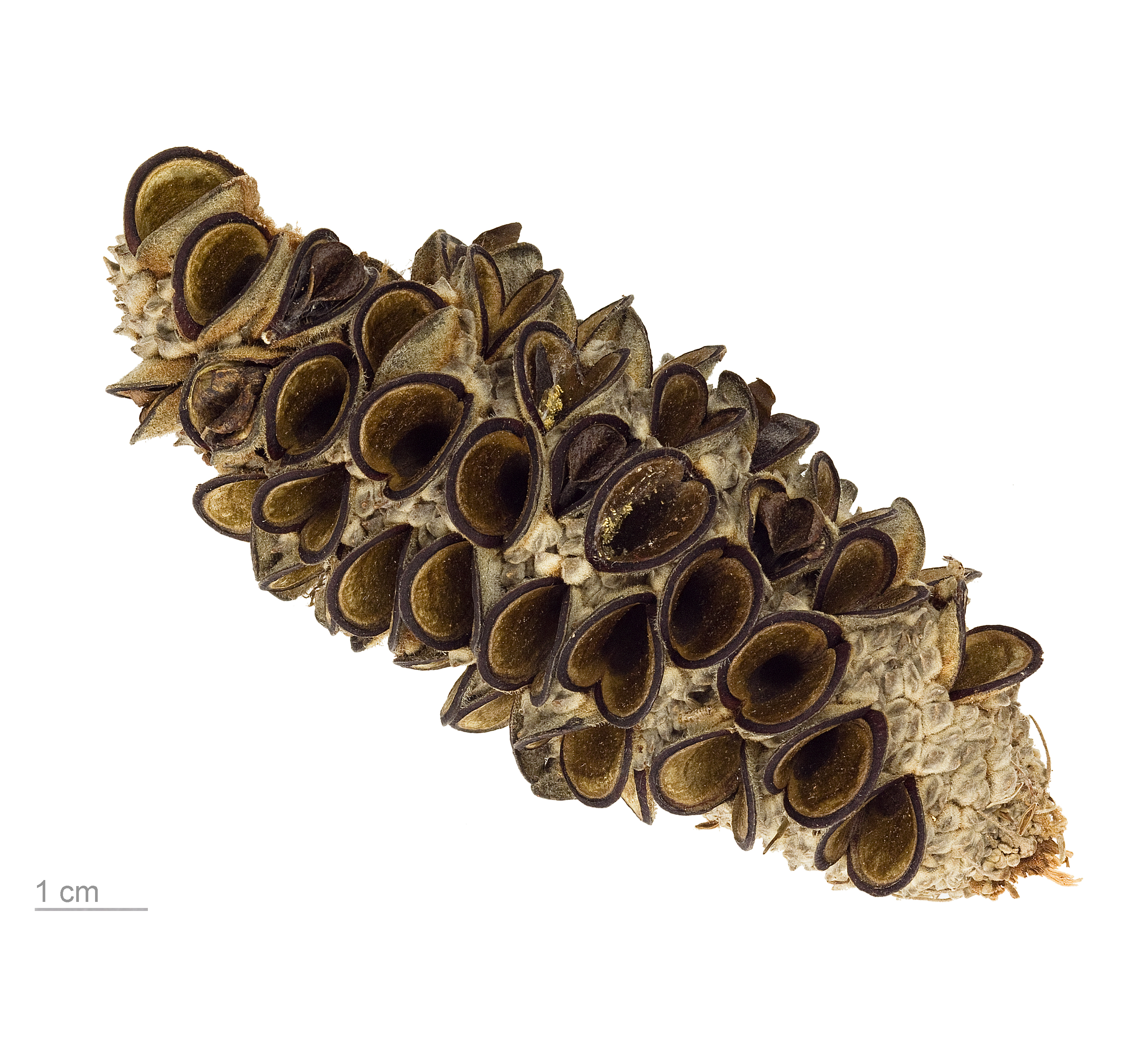
Catalog fields
- Genus
- Banksia
- Photo
- Not recorded
- Edible
- Yes
- layout
- double
- Habitat
- Fire-tolerant. Follicles usually opening when mature, within a year of flowering.
- Published
- Yes
- Food group
- Nectar
- Latin name
- Banksia integrifolia
- Fruit photo
- Not recorded
- Plant title
- Coast banksia
- Source URLs
- https://profiles.ala.org.au/opus/foa/profile/Banksia%20integrifolia | https://www.anbg.gov.au/apu/plants/banksia.html; https://plantnet.rbgsyd.nsw.gov.au/cgi-bin/NSWfl.pl?lvl=sp&name=Banksia~integrifolia&page=nswfl Open source ↗ Open source 2 ↗ Open source 3 ↗
- Catalogue ID
- CAT-00149
- Mature width
- Not confirmed; allow spread appropriate to growth habit
- Native range
- Widespread along the east coast and inland to the nearby mountains, from Proserpine, Qld, to Port Phillip Bay, Vic.
- Plant family
- Proteaceae
- Supplier SKU
- Not recorded
- Listing group
- Regional / traditional food plant
- Mature height
- 5–25 m
- Native states
- NSW, QLD, VIC
- Original list
- No
- Research date
- 10/10/2026
- Research notes
- Profile enriched from botanical/nursery sources. Dimensions are unpruned regional estimates where available; missing measurements remain explicit. Seasons are regional guides and vary with climate, location, cultivar and plant maturity. Drought and cultivation guidance are qualitative garden inferences, not measured ratings.
- Evidence status
- Published food use; preparation detail review pending
- Fruiting season
- Woody follicles develop after flowering and may persist.
- Background photo
- Not recorded
- Edible component
- Floral nectar traditionally made into a drink
- Flowering season
- Mainly January-June.
- Brief description
- Evergreen coastal banksia tree with pale yellow flower spikes.
- Drought tolerance
- Moderate to high once established.
- Preparation notes
- Traditional nectar use refers to flower nectar, not edible woody cones or seeds; confirm clean harvest method.
- Flower description
- Pale-yellow, cylindrical flower spikes.
- General cultivation
- General guidance (qualitative): Good sunny well-drained prospect; avoid high-phosphorus fertilisers.
- Botanical description
- Tree to 25 m high. Bark roughly tessellated. Stems pubescent and pilose, glabrescent, pale brown. Leaves in whorls of 3–5; petiole 4–10 mm long; lamina narrowly obovate to narrowly elliptic, 4–20 cm long, 10–26 mm wide, obtuse or emarginate; margins not or slightly recurved, entire; upper surface dull green, pubescent, glabrescent; lower surface closely white-woolly. Inflorescence 5–12 cm long; involucral bracts 2–10 mm long, tomentose. Flowers pale yellow, including styles. Perianth 22–25 mm long including limb of 3.5–4.5 mm, closely pubescent outside, glabrous inside. Pistil straight or slightly curved, 27–32 mm long, glabrous; pollen presenter 0.5–1 mm long, scarcely thickened. Old flowers soon falling. Follicles up to c. 60, narrowly elliptic, 7–15 mm long, 3–10 mm high, 3–6 mm wide; valves semi-elliptic, smooth, tomentose, glabrescent. Seed obovate, 10–20 mm long; seed body ± cuneate, 6–10 mm long, ± smooth.
- Other botanical names
- Not recorded
- Attracts birds and bugs
- Native bees and insects visit flowers; canopy shelters birds.
- Flora of Australia profile
- https://profiles.ala.org.au/opus/foa/profile/Banksia%20integrifolia Open source ↗
- Fruit type and description
- Woody cone-like structures with follicles; nectar is the recorded edible component.
- Flora of Australia citation
- A.S. George. Banksia integrifolia. Flora of Australia, Australian Biological Resources Study, Department of Climate Change, Energy, the Environment and Water, Canberra. https://profiles.ala.org.au/opus/foa/profile/Banksia%20integrifolia (accessed 2026-10-15). Copyright Commonwealth of Australia; CC BY 4.0 (https://creativecommons.org/licenses/by/4.0/). HTML formatting removed; species-level context added where noted. Open source ↗ Open source 2 ↗
- Flora of Australia retrieved
- 15/10/2026