CAT-00018
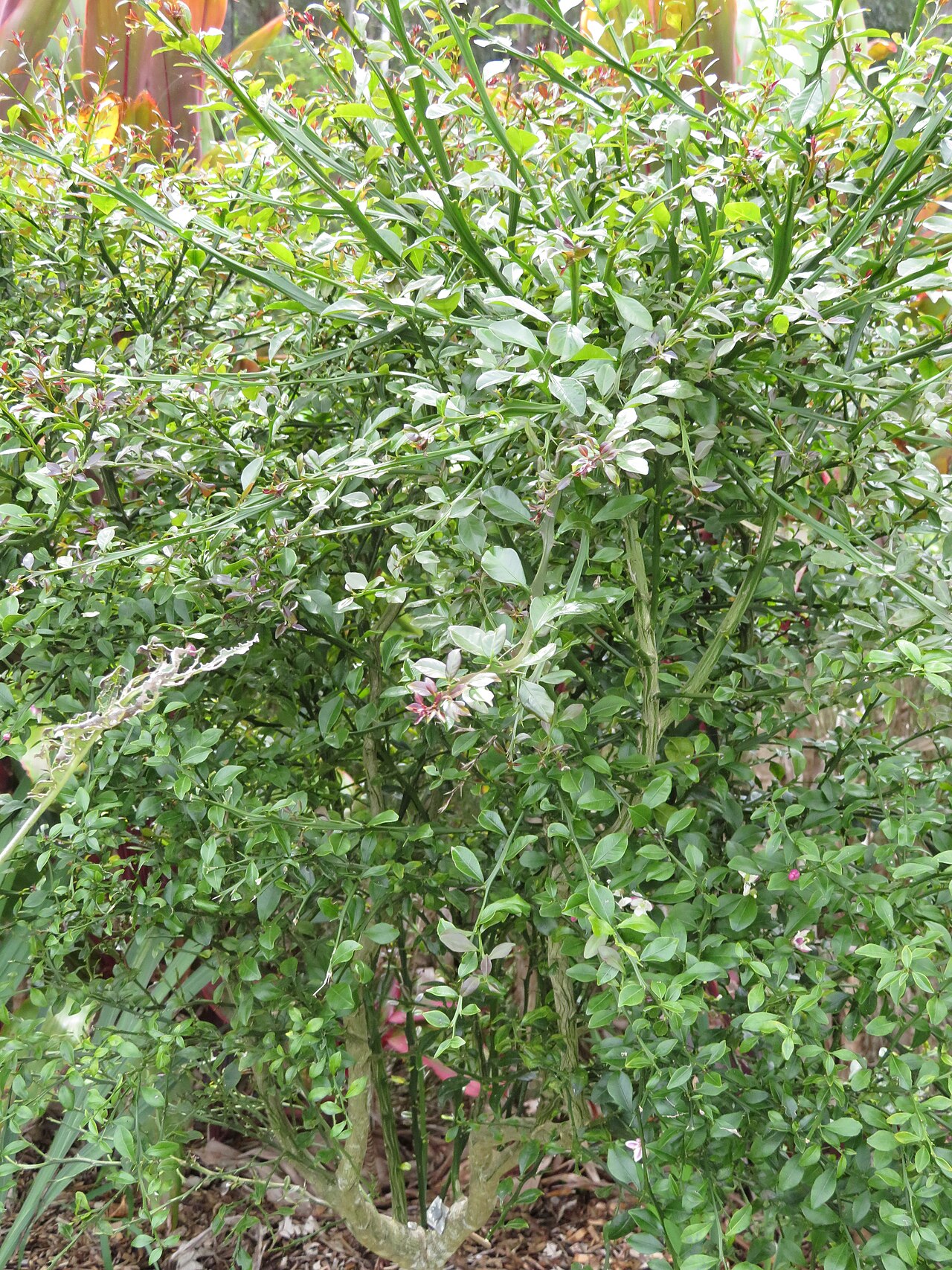
Finger lime
Citrus australasica
Catalog fields
- Genus
- Citrus
- Photo
- photos/CAT-00018-A.jpg
- Edible
- Yes
- layout
- full
- Habitat
- Grows in rainforest and ecotone with open forest, often in basalt-derived soils.
- Published
- Yes
- Food group
- Fruit
- Latin name
- Citrus australasica
- Fruit photo
- photos/CAT-00018-F.jpg
- Plant title
- Finger lime
- Source URLs
- https://profiles.ala.org.au/opus/foa/profile/Citrus%20australasica | https://tuckerbush.com.au/finger-lime-citrus-australasica/ Open source ↗ Open source 2 ↗
- Catalogue ID
- CAT-00018
- Mature width
- 2-3m
- Native range
- Restricted to Australia, from Brisbane, southeastern Queensland, S to Clarence River, northern New South Wales.
- Plant family
- Rutaceae
- Supplier SKU
- Not recorded
- Listing group
- Common bush-food crop
- Mature height
- 2-6m
- Native states
- NSW, QLD
- Original list
- No
- Research date
- 10/10/2026
- Research notes
- Profile enriched from botanical/nursery sources. Dimensions are unpruned regional estimates where available; missing measurements remain explicit. Seasons are regional guides and vary with climate, location, cultivar and plant maturity. Drought and cultivation guidance are qualitative garden inferences, not measured ratings.
- Evidence status
- Nursery food-use source; preparation detail review pending
- Fruiting season
- Variable by cultivar; confirm fruiting window with supplier.
- Background photo
- Not recorded
- Edible component
- Juice vesicles and zest
- Flowering season
- Variable by cultivar and climate
- Brief description
- Thorny citrus shrub or small tree with small leaves.
- Drought tolerance
- Low to moderate; maintain moisture for good fruiting.
- Preparation notes
- Use juice vesicles from ripe fruit; skin bitterness and flavour vary by cultivar.
- Flower description
- Small white citrus flowers.
- General cultivation
- General guidance (qualitative): Suitable with drainage and summer water; protect from frost and drying wind.
- Botanical description
- Shrub or small tree to 10 m high; spines 5–12 (–25) mm long, solitary. Leaves: petiole 1–3 mm long, not winged, articulated with lamina; lamina obovate to rhomboid, 22–25 (–50) mm long by 14–15 (–25) mm wide (smaller and ovate in young plants), truncate at base, obscurely toothed in upper half, truncate or emarginate, glabrous. Flowers solitary or paired, male (mostly) and bisexual, (3–) 5-merous; Petals oblong, (6–) 7–8 (–9) mm long, white. Stamens 20–25, free. Ovary 5–7-locular, each locule with 8–16 ovules. Fruits cylindric-fusiform, often weakly falcate, to 50 (–100) mm long and (15–) 20 (–25) mm diam.; pericarp rough, greenish yellow; mesocarp yellow. Seeds many per locule, ovoid, 6–7 mm long; embryo solitary.
- Other botanical names
- Not recorded
- Attracts birds and bugs
- Native bees and insects visit flowers; foliage provides canopy shelter.
- Flora of Australia profile
- https://profiles.ala.org.au/opus/foa/profile/Citrus%20australasica Open source ↗
- Fruit type and description
- Elongated citrus fruit containing bead-like juice vesicles; colour varies by selection.
- Flora of Australia citation
- D.J. Mabberley. Citrus australasica. Flora of Australia, Australian Biological Resources Study, Department of Climate Change, Energy, the Environment and Water, Canberra. https://profiles.ala.org.au/opus/foa/profile/Citrus%20australasica (accessed 2026-10-14). Copyright Commonwealth of Australia; CC BY 4.0 (https://creativecommons.org/licenses/by/4.0/). HTML formatting removed; species-level context added where noted. Open source ↗ Open source 2 ↗
- Flora of Australia retrieved
- 14/10/2026