CAT-00020
Desert lime
Citrus glauca
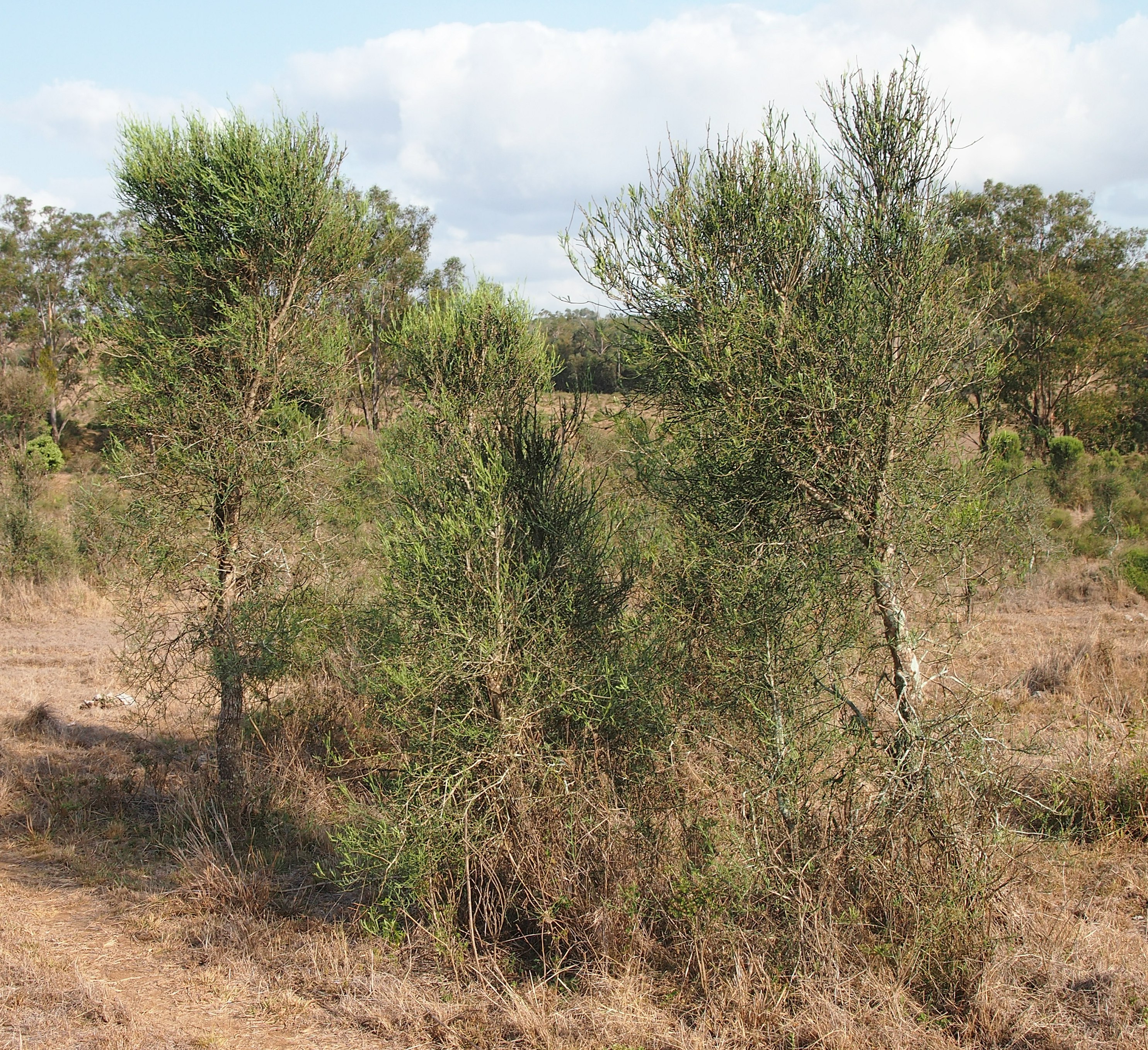
Catalog fields
- Genus
- Citrus
- Photo
- Not recorded
- Edible
- Yes
- layout
- single
- Habitat
- Often common in mixed softwood forest especially in secondary growth, coolibah forest, brigalow–belah forest where very common as on the Darling Downs, to 340 m altitude, in heavy brown clays, desert loams and red earths, sometimes in otherwise treeless habitats.
- Published
- Yes
- Food group
- Fruit
- Latin name
- Citrus glauca
- Fruit photo
- Not recorded
- Plant title
- Desert lime
- Source URLs
- https://profiles.ala.org.au/opus/foa/profile/Citrus%20glauca | https://tuckerbush.com.au/desert-lime-citrus-glauca/ Open source ↗ Open source 2 ↗
- Catalogue ID
- CAT-00020
- Mature width
- 2-4m
- Native range
- Restricted to Queensland, New South Wales and South Australia. Cultivated as a street tree in southern Queensland.
- Plant family
- Rutaceae
- Supplier SKU
- Not recorded
- Listing group
- Common bush-food crop
- Mature height
- 3-6m
- Native states
- NSW, QLD, SA
- Original list
- No
- Research date
- 10/10/2026
- Research notes
- Profile enriched from botanical/nursery sources. Dimensions are unpruned regional estimates where available; missing measurements remain explicit. Seasons are regional guides and vary with climate, location, cultivar and plant maturity. Drought and cultivation guidance are qualitative garden inferences, not measured ratings.
- Evidence status
- Nursery food-use source; preparation detail review pending
- Fruiting season
- Summer.
- Background photo
- Not recorded
- Edible component
- Fruit juice and zest
- Flowering season
- Spring.
- Brief description
- Small, thorny citrus adapted to dry inland conditions.
- Drought tolerance
- High once established.
- Preparation notes
- Use ripe acidic fruit in preserves or flavouring; remove seeds.
- Flower description
- Small white citrus flowers.
- General cultivation
- General guidance (qualitative): Trial a grafted plant in full sun and excellent drainage; humid summer conditions differ from its inland habitat.
- Botanical description
- Deciduous tree to 7 (–12) m high and bole to 15 cm diam. with pendulous branches, or tangled spiny shrub; far-spreading root-suckers heavily armed and sometimes flowering and fruiting; spines solitary, sometimes curved, to 6 cm long on young shoots but usually less. Leaves: petiole c. 2 mm long, unwinged; lamina oblong, linear- or elongate-obcuneate to sublinear, (10–) 30–40 (–55) mm long, (2–) 4–12 mm wide, cuneate at base, entire to crenulate, obtuse to emarginate, adpressed grey-hairy. Flowers solitary or in small axillary cymes, bisexual (possibly sometimes not), sweetly scented. Sepals 1–2 mm long, united basally by shallow cup. Petals 3–5, linear-oblong, 4–6 mm long, greenish white to yellow. Stamens (3 or) 4 times as many as petals, free or rarely weakly coherent at base. Ovary 3-locular, each locule with 2 ovules. Fruit subglobular or obovoid, 12–15 mm diam., lemon-coloured when ripe. Seeds 2–4, 5–6 mm long, yellowish grey, furrowed; embryo solitary.
- Other botanical names
- Not recorded
- Attracts birds and bugs
- Native bees and insects visit flowers; foliage provides canopy shelter.
- Flora of Australia profile
- https://profiles.ala.org.au/opus/foa/profile/Citrus%20glauca Open source ↗
- Fruit type and description
- Small yellow-green citrus fruit with intense acidic juice.
- Flora of Australia citation
- D.J. Mabberley. Citrus glauca. Flora of Australia, Australian Biological Resources Study, Department of Climate Change, Energy, the Environment and Water, Canberra. https://profiles.ala.org.au/opus/foa/profile/Citrus%20glauca (accessed 2026-10-14). Copyright Commonwealth of Australia; CC BY 4.0 (https://creativecommons.org/licenses/by/4.0/). HTML formatting removed; species-level context added where noted. Open source ↗ Open source 2 ↗
- Flora of Australia retrieved
- 14/10/2026