CAT-00029
Lemon aspen
Acronychia acidula
Catalog fields
- Genus
- Acronychia
- Photo
- Not recorded
- Edible
- Yes
- layout
- single
- Habitat
- Grows in upland rainforest to 1000 m altitude.
- Published
- Yes
- Food group
- Fruit
- Latin name
- Acronychia acidula
- Fruit photo
- Not recorded
- Plant title
- Lemon aspen
- Source URLs
- https://profiles.ala.org.au/opus/foa/profile/Acronychia%20acidula | https://tuckerbush.com.au/lemon-aspen-acronychia-acidula/ Open source ↗ Open source 2 ↗
- Catalogue ID
- CAT-00029
- Mature width
- 4-6m
- Native range
- Occurs from the Atherton Tableland, NE Queensland, to the Eungella Range, east-central Queensland.
- Plant family
- Rutaceae
- Supplier SKU
- Not recorded
- Listing group
- Common bush-food crop
- Mature height
- 6-7m
- Native states
- QLD
- Original list
- No
- Research date
- 10/10/2026
- Research notes
- Profile enriched from botanical/nursery sources. Dimensions are unpruned regional estimates where available; missing measurements remain explicit. Seasons are regional guides and vary with climate, location, cultivar and plant maturity. Drought and cultivation guidance are qualitative garden inferences, not measured ratings.
- Evidence status
- Nursery food-use source; preparation detail review pending
- Fruiting season
- Autumn-winter reported by nursery.
- Background photo
- Not recorded
- Edible component
- Fruit flesh
- Flowering season
- Summer-early autumn.
- Brief description
- Evergreen rainforest tree with aromatic foliage.
- Drought tolerance
- Low to moderate; moisture needed for fruiting.
- Preparation notes
- Use acidic ripe pulp for sauces, preserves or flavouring; remove seeds.
- Flower description
- Small white flowers.
- General cultivation
- General guidance (qualitative): Trial a warm frost-protected site with summer water.
- Botanical description
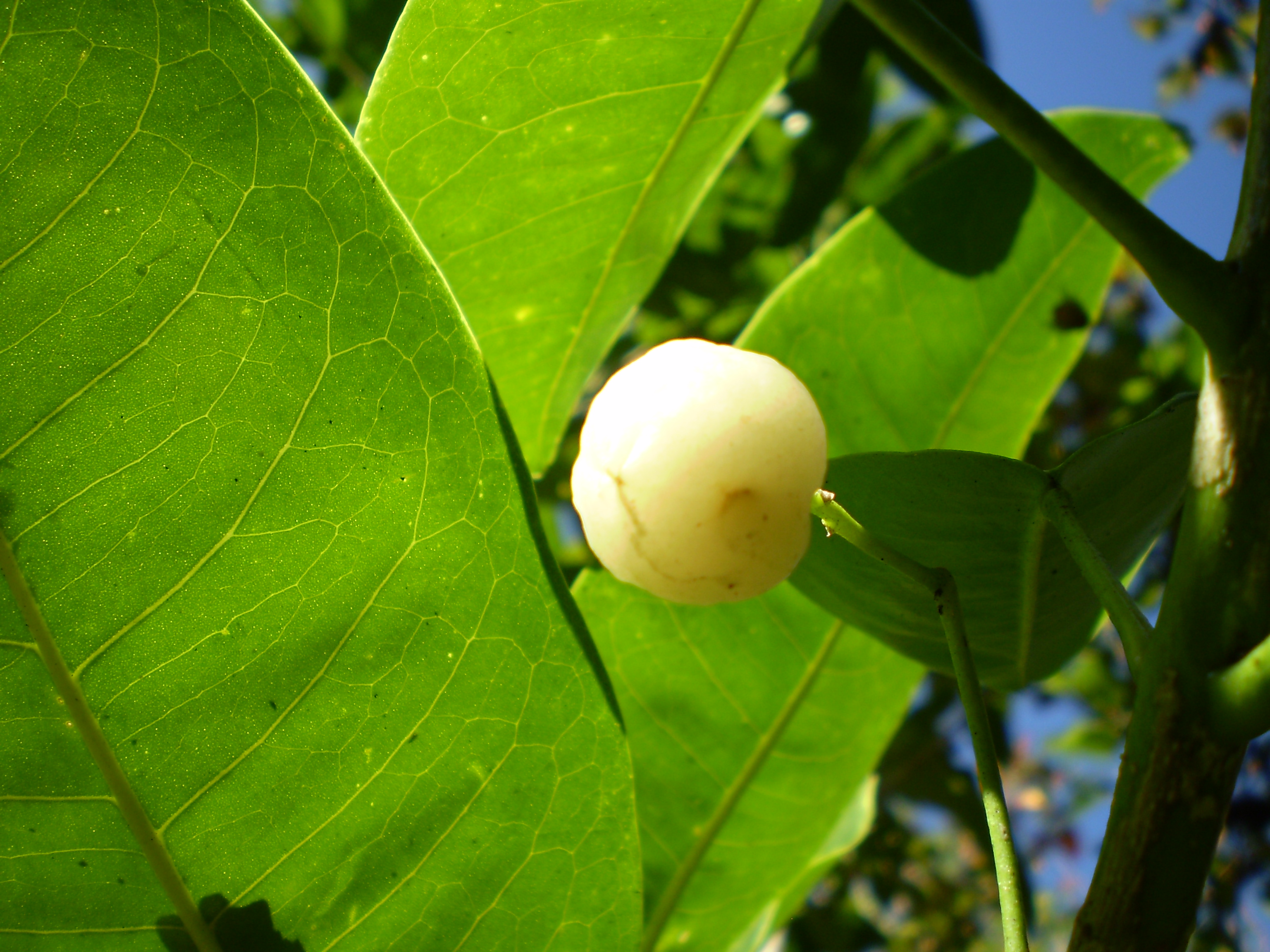
- Tree to 27 m high. Internodes of young branchlets terete, slightly compressed, or sub-tetragonous. Leaves simple, glabrous; petiole 2–7 cm long; lamina elliptic or broadly so (occasional leaves obovate), 8–23.5 cm long, 4.3–12 cm wide, rounded to obtusely acuminate, with acumen to 1 cm long. Inflorescences several- or many-flowered, axillary and/or infra-foliar, 3–10 cm long; pedicels 2–4 mm long (3–5 mm long in fruit), glabrous. Flower buds obtuse. Sepals 2–2.5 mm wide, glabrous adaxially. Petals 7–8.5 mm long, like staminal filaments deciduous in fruit. Gynoecium syncarpous, like fruit 4-loculed; ovary glabrous, like fruit without septicidal fissures. Fruit syncarpous, subglobose to broadly conical in outline, 13–16 mm long, without stylar beak, glabrous; fruiting carpels without ruptured wall opening into locule; dried fruit as seen in medial transverse section with outer part of pericarp less than 0.5 mm thick, exocarp fleshy and mesocarp spongy between locules; endocarp cartilaginous. Seeds c. 4.5 mm long.
- Other botanical names
- Not recorded
- Attracts birds and bugs
- Native bees and flies visit flowers; canopy hosts birds and small mammals.
- Flora of Australia profile
- https://profiles.ala.org.au/opus/foa/profile/Acronychia%20acidula Open source ↗
- Fruit type and description
- Yellow-green fleshy fruit with acidic lemon-grapefruit flavour.
- Flora of Australia citation
- T.G. Hartley. Acronychia acidula. Flora of Australia, Australian Biological Resources Study, Department of Climate Change, Energy, the Environment and Water, Canberra. https://profiles.ala.org.au/opus/foa/profile/Acronychia%20acidula (accessed 2026-10-14). Copyright Commonwealth of Australia; CC BY 4.0 (https://creativecommons.org/licenses/by/4.0/). HTML formatting removed; species-level context added where noted. Open source ↗ Open source 2 ↗
- Flora of Australia retrieved
- 14/10/2026