CAT-00042
Sandpaper fig
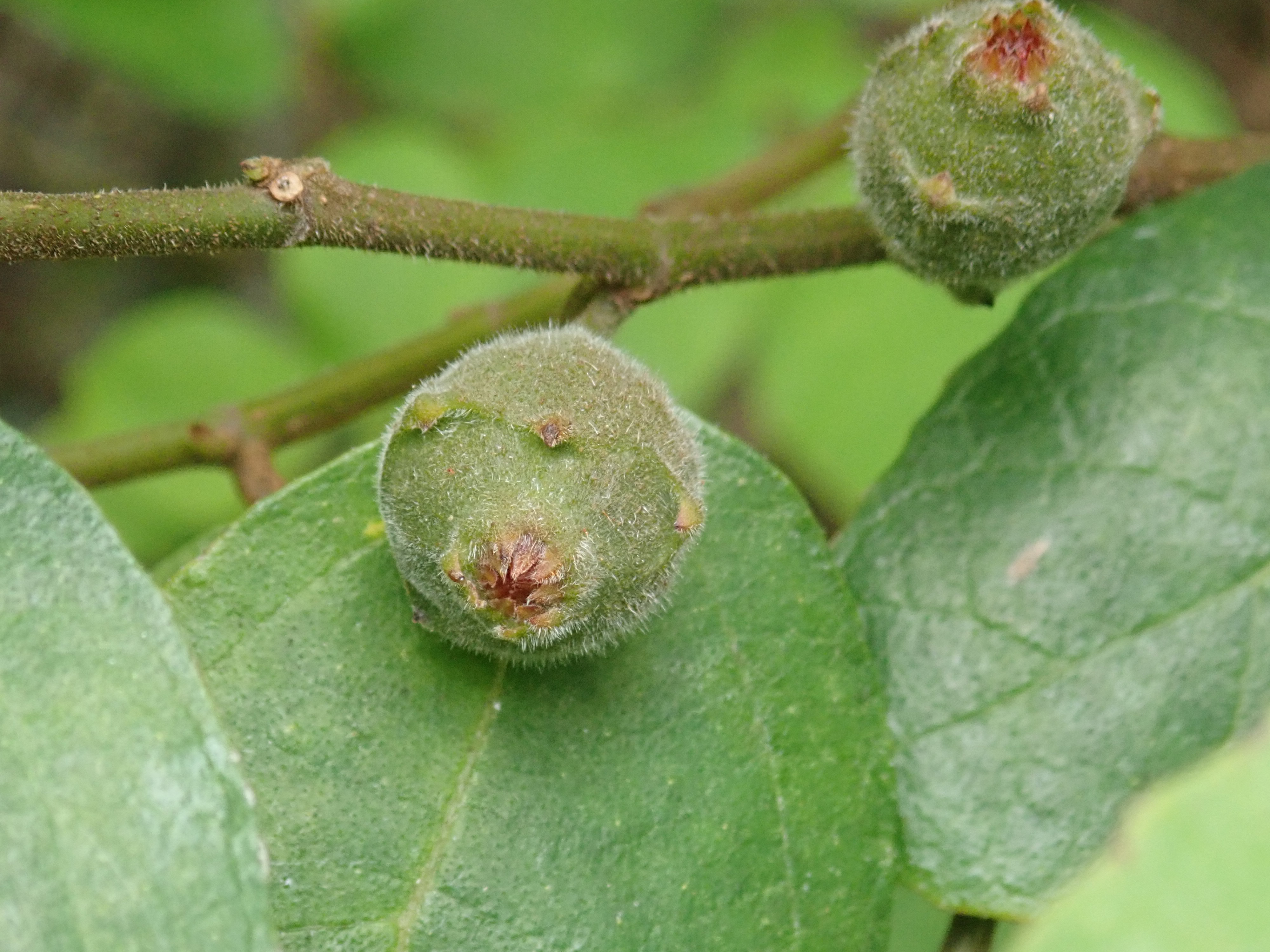
Ficus coronata
Catalog fields
- Genus
- Ficus
- Photo
- Not recorded
- Edible
- Yes
- layout
- single
- Habitat
- Grows in a wide range of habitats, often near creeks, in rainforest, gallery forest and open forest. Fruit eaten by many bird species (Cooper & Cooper 2004: 323).
- Published
- Yes
- Food group
- Fruit
- Latin name
- Ficus coronata
- Fruit photo
- Not recorded
- Plant title
- Sandpaper fig
- Source URLs
- https://profiles.ala.org.au/opus/foa/profile/Ficus%20coronata | https://tuckerbush.com.au/sandpaper-fig-ficus-coronata/; https://powo.science.kew.org/taxon/urn%3Alsid%3Aipni.org%3Anames%3A583382-1 Open source ↗ Open source 2 ↗ Open source 3 ↗
- Catalogue ID
- CAT-00042
- Mature width
- 3-5m
- Native range
- Endemic in Australia; occurs widely in eastern Queensland from near Bowen south through eastern New South Wales to far eastern Victoria (Mallacoota area). Previously reported as rare in the Northern Territory (Chew 1989: 60) but not currently considered to occur in that territory. The specimen cited by Chew (1989), viz. Roper River, W. Baldwin Spencer (AD), requires re-assessment.
- Plant family
- Moraceae
- Supplier SKU
- Not recorded
- Listing group
- Nursery-listed / regional edible
- Mature height
- 6-10m
- Native states
- NSW, NT, QLD, VIC
- Original list
- No
- Research date
- 10/10/2026
- Research notes
- Profile enriched from botanical/nursery sources. Dimensions are unpruned regional estimates where available; missing measurements remain explicit. Seasons are regional guides and vary with climate, location, cultivar and plant maturity. Drought and cultivation guidance are qualitative garden inferences, not measured ratings.
- Evidence status
- Nursery food-use source; preparation detail review pending
- Fruiting season
- January-June reported by nursery.
- Background photo
- Not recorded
- Edible component
- Ripe figs
- Flowering season
- Flowers enclosed inside figs
- Brief description
- Small fig tree with coarse, sandpapery leaves.
- Drought tolerance
- Moderate once established; benefits from moisture.
- Preparation notes
- Use ripe soft figs; wash and check for damage or insects.
- Flower description
- Tiny flowers enclosed inside the fig; no conspicuous external flower display.
- General cultivation
- General guidance (qualitative): Promising with substantial root space; keep away from pipes and paving.
- Botanical description
- Shrub or tree to 15 m high, generally strongly scabrid. Leaves alternate to spiral; lamina ovate to oblong or narrowly elliptic, (3.5–) 5–15 (–17) cm long, (1.5–) 2–8 cm wide (larger and often lobed on young growth), cuneate to rounded (sometimes cordate) and often asymmetrical at base, entire or dentate to crenulate margin, acuminate at apex, strongly scabrid above, often densely brown-villous beneath (shortly white-pubescent beneath, fide Ross 1983: 57); lateral veins 5–8 pairs; petiole 0.3–1 cm long, bristly; stipules to 1 cm long, hairy. Figs axillary, ramiflorous or sometimes cauliflorous, ellipsoidal to ovoid to ± globular, 1.5–2.5 (–3) cm long, dark red or purplish black when mature, scabrid, often also hairy; ostiole to 4 mm diam., raised with protruding apical bracts; lateral bracts present; basal bracts variously arranged; peduncle to 1.2 cm long. Male flowers with 4 or 5 tepals; stamens 1 or 2. Female and gall flowers with 4–6 tepals.
- Other botanical names
- Not recorded
- Attracts birds and bugs
- Native bees and insects visit flowers; canopy shelters birds.
- Flora of Australia profile
- https://profiles.ala.org.au/opus/foa/profile/Ficus%20coronata Open source ↗
- Fruit type and description
- Hairy figs ripen purple; flowers develop inside the fig structure.
- Flora of Australia citation
- W.-L. Chew, P.G. Kodela. Ficus coronata. Flora of Australia, Australian Biological Resources Study, Department of Climate Change, Energy, the Environment and Water, Canberra. https://profiles.ala.org.au/opus/foa/profile/Ficus%20coronata (accessed 2026-10-14). Copyright Commonwealth of Australia; CC BY 4.0 (https://creativecommons.org/licenses/by/4.0/). HTML formatting removed; species-level context added where noted. Open source ↗ Open source 2 ↗
- Flora of Australia retrieved
- 14/10/2026