CAT-00070
Strawberry gum
Eucalyptus olida
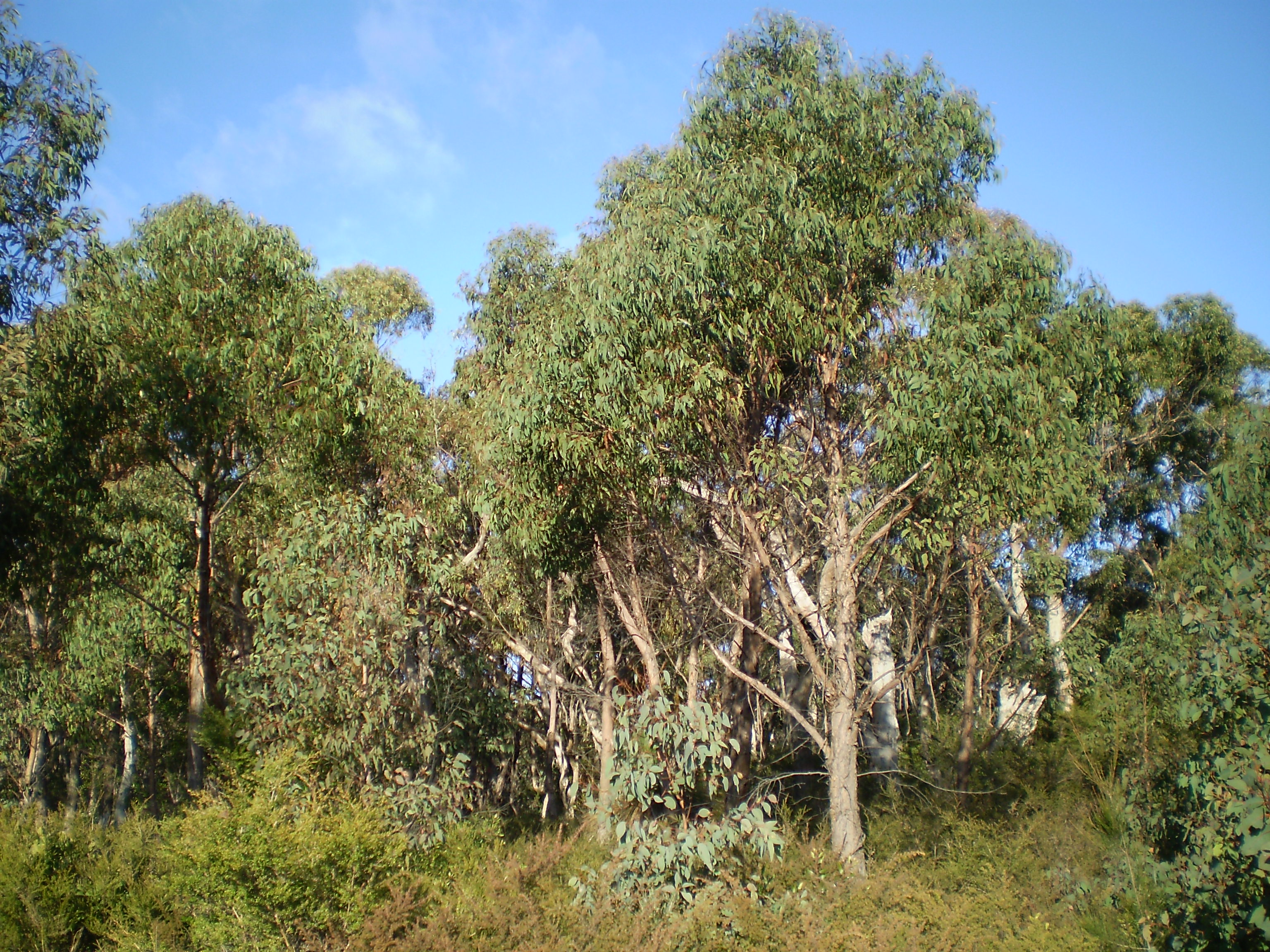
Catalog fields
- Genus
- Eucalyptus
- Photo
- Not recorded
- Edible
- Yes
- layout
- single
- Habitat
- Found on granite-derived soils.
- Published
- Yes
- Food group
- Herb / spice
- Latin name
- Eucalyptus olida
- Fruit photo
- Not recorded
- Plant title
- Strawberry gum
- Source URLs
- https://profiles.ala.org.au/opus/foa/profile/Eucalyptus%20olida | https://tuckerbush.com.au/strawberry-gum-eucalyptus-olida/ Open source ↗ Open source 2 ↗
- Catalogue ID
- CAT-00070
- Mature width
- 4-8m
- Native range
- Known only from two populations, viz. the Gibraltar Range and Timbarra Plateau in the eastern Northern Tablelands of New South Wales.
- Plant family
- Myrtaceae
- Supplier SKU
- Not recorded
- Listing group
- Nursery-listed / regional edible
- Mature height
- 10-20m
- Native states
- NSW
- Original list
- No
- Research date
- 10/10/2026
- Research notes
- Profile enriched from botanical/nursery sources. Dimensions are unpruned regional estimates where available; missing measurements remain explicit. Seasons are regional guides and vary with climate, location, cultivar and plant maturity. Drought and cultivation guidance are qualitative garden inferences, not measured ratings.
- Evidence status
- Nursery food-use source; preparation detail review pending
- Fruiting season
- Capsules persist after flowering.
- Background photo
- Not recorded
- Edible component
- Leaves for flavouring
- Flowering season
- Spring reported by nursery.
- Brief description
- Tall eucalypt with strawberry-scented leaves.
- Drought tolerance
- Low to moderate; avoid prolonged drying.
- Preparation notes
- Use correctly identified leaves in small culinary amounts; concentrated essential oil is not a substitute.
- Flower description
- Small cream-white gum flowers with numerous stamens.
- General cultivation
- General guidance (qualitative): Large-property trial with summer water and drainage.
- Botanical description
- Tree to 30 m high; forming a lignotuber. Bark rough, thick, flaky and fibrous to branches 5–8 cm diam., orange-brown or grey. Juvenile growth (coppice or field seedlings to 50 cm): stem rounded in cross-section, warty to almost scabrid on lower stem; juvenile leaves subsessile to shortly petiolate and opposite for c. 5 nodes, then alternate, petiolate, ovate, 4.5–10 cm long, 2.5–5.5 cm wide, base rounded or tapering to petiole, dull, green to blue-green. Adult leaves alternate; petiole 1–2 cm long; blade lanceolate to falcate, 7–18.5 cm long, 0.9–2.6 cm wide, base oblique or tapering to petiole, concolorous, slightly glossy to dull, green to grey-green, side-veins acute, sparsely to moderately reticulate, intramarginal vein parallel to and well removed from margin, oil glands mostly island. Inflorescence axillary unbranched, peduncles 0.4–1.8 cm long, buds 7–15 or more per umbel, pedicels 0.3–0.4 cm long. Mature buds obovoid, c. 0.4 cm long, 0.2–0.3 cm wide, scar absent, operculum rounded-apiculate to conical, stamens inflexed or irregularly flexed, all fertile, anthers reniform to cordate, versatile, dorsifixed, dehiscing by confluent slits, style long, stigma tapered, locules (3) 4, the placentae each with 2 vertical ovule rows. Flowers white. Fruit on pedicels 0.2–0.4 cm long, cup-shaped, barrel-shaped or campanulate, 0.6–0.7 cm long, 0.5–0.9 cm wide, disc raised-annular to slightly descending, valves (3) 4, near rim level or enclosed. Seeds dark brown to grey to black, 1.5–2.5 mm long, pyramidal or obliquely pyramidal, dorsal surface smooth, hilum terminal. [See also Bean (1997: 129) for a description of E. olida - Editor, 4 July 2025.]
- Other botanical names
- Not recorded
- Attracts birds and bugs
- Native bees and insects visit flowers; canopy shelters birds.
- Flora of Australia profile
- https://profiles.ala.org.au/opus/foa/profile/Eucalyptus%20olida Open source ↗
- Fruit type and description
- Woody capsules containing tiny seeds; leaves are the culinary component.
- Flora of Australia citation
- A.V. Slee, M.I.H. Brooker, S.M. Duffy, J.G. West. Eucalyptus olida. Flora of Australia, Australian Biological Resources Study, Department of Climate Change, Energy, the Environment and Water, Canberra. https://profiles.ala.org.au/opus/foa/profile/Eucalyptus%20olida (accessed 2026-10-14). Copyright Commonwealth of Australia; CC BY 4.0 (https://creativecommons.org/licenses/by/4.0/). HTML formatting removed; species-level context added where noted. Open source ↗ Open source 2 ↗
- Flora of Australia retrieved
- 14/10/2026