CAT-00098
Cocky apple
Planchonia careya
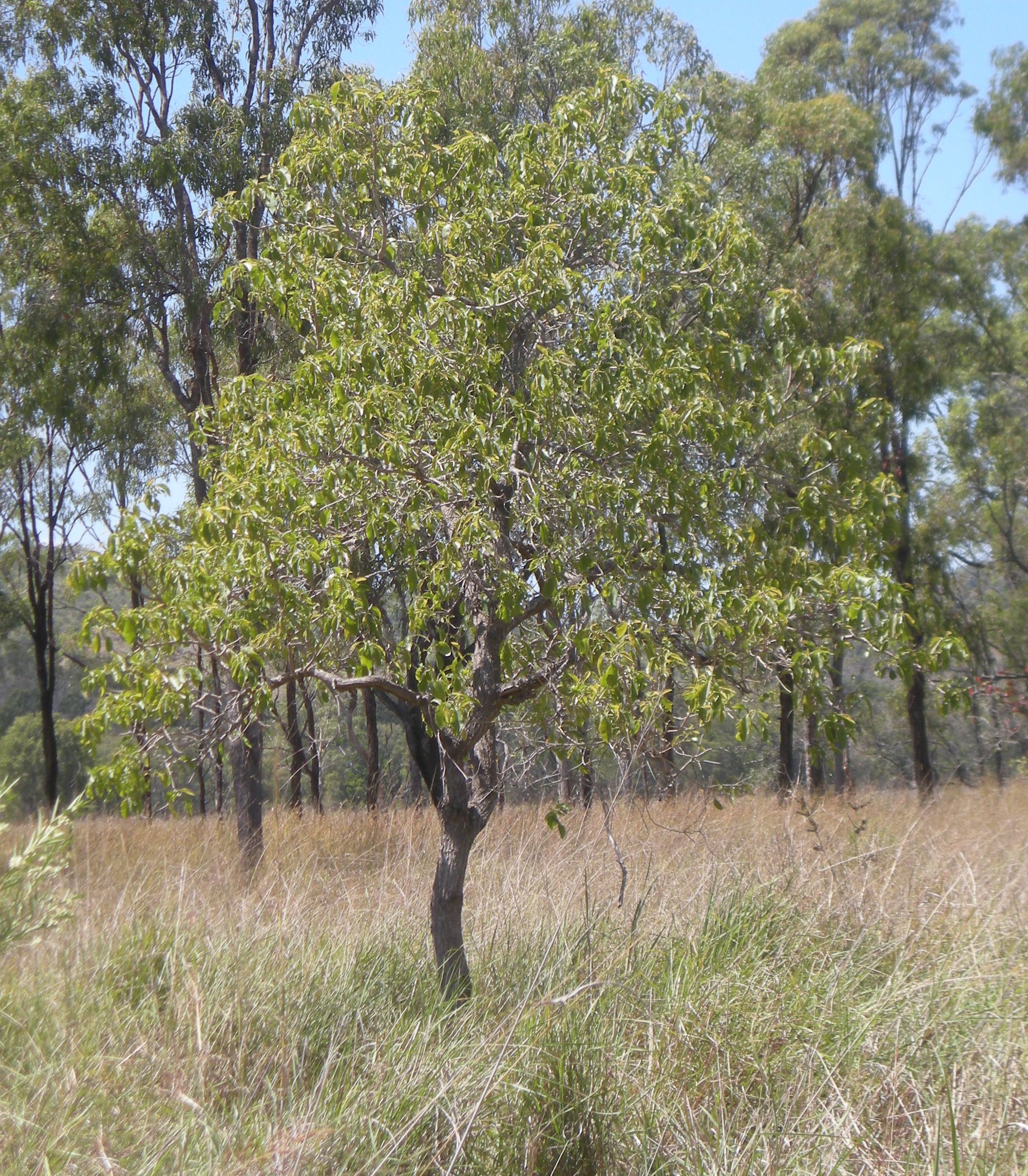
Catalog fields
- Genus
- Planchonia
- Photo
- Not recorded
- Edible
- Yes
- layout
- single
- Habitat
- Grows in open woodlands, often on flats and in gullies of coastal plain.
- Published
- Yes
- Food group
- Fruit
- Latin name
- Planchonia careya
- Fruit photo
- Not recorded
- Plant title
- Cocky apple
- Source URLs
- https://profiles.ala.org.au/opus/foa/profile/Planchonia%20careya | https://www.daleysfruit.com.au/bushfoodintro.htm; https://anpsa.org.au/plant_profiles/planchonia-careya/; https://powo.science.kew.org/taxon/urn%3Alsid%3Aipni.org%3Anames%3A469491-1 Open source ↗ Open source 2 ↗ Open source 3 ↗ Open source 4 ↗
- Catalogue ID
- CAT-00098
- Mature width
- Not confirmed; allow spread appropriate to growth habit
- Native range
- Occurs across northern Australia from the Kimberley, Western Australia, to just S of the tropic in Queensland; also in Papua New Guinea.
- Plant family
- Lecythidaceae
- Supplier SKU
- Not recorded
- Listing group
- Nursery-listed / regional edible
- Mature height
- 4-10 m
- Native states
- NT, QLD, WA
- Original list
- No
- Research date
- 10/10/2026
- Research notes
- Source is a nursery catalogue overview; detailed species verification remains. Profile enriched from botanical/nursery sources. Dimensions are unpruned regional estimates where available; missing measurements remain explicit. Seasons are regional guides and vary with climate, location, cultivar and plant maturity. Drought and cultivation guidance are qualitative garden inferences, not measured ratings.
- Evidence status
- Nursery food-use listing; species detail review pending
- Fruiting season
- After flowers
- Background photo
- Not recorded
- Edible component
- Soft ripe fruit flesh
- Flowering season
- July-October regional guide.
- Brief description
- Briefly deciduous woodland tree with large flowers opening at night.
- Drought tolerance
- Moderate; seasonally dry habitat.
- Preparation notes
- Confirm species identification, the specified edible part, ripeness and species-specific preparation before use.
- Flower description
- Showy flowers with long pink and white stamens; they open in the evening and are short-lived.
- General cultivation
- General guidance (qualitative): Warm sheltered trial; frost and cold may limit growth.
- Botanical description
- Tree to 15 m high, deciduous; bark fissured, corky. Leaves: lamina spathulate, obovate to broadly ovate, mostly 2.5– 10 cm long, 3–6 cm wide, cuneate at base, crenulate margin, emarginate to obtusely acuminate at apex, glabrous, glossy above, dull below, often reddish; petiole 0.5–3 cm long. Racemes few-flowered; pedicels mostly 8–20 mm long; bracteoles cordate-ovate, 4–6 mm long. Calyx-tube papillose-hirsute, 5–15 mm long, narrow at base; lobes ovate to semi-elliptic, ciliate, 3–11 mm long, 5–8 mm wide. Petals obovate-oblong, 10–45 mm long, 10–17 mm wide, white and pink. Staminal tube 1–11 mm long, pink; filaments 20–45 mm long, white. Style 4–7 cm long. Fruit obovoid to ellipsoidal, smooth, to 9 cm long, 3.7 cm wide; pericarp thick, fibrous. Seed compressed-oval, c. 5 mm long.
- Other botanical names
- Not recorded
- Attracts birds and bugs
- Native bees and insects visit flowers; canopy shelters birds.
- Flora of Australia profile
- https://profiles.ala.org.au/opus/foa/profile/Planchonia%20careya Open source ↗
- Fruit type and description
- Green egg-shaped fruit to about 9 cm with fibrous pulp.
- Flora of Australia citation
- R.J.F. Henderson. Planchonia careya. Flora of Australia, Australian Biological Resources Study, Department of Climate Change, Energy, the Environment and Water, Canberra. https://profiles.ala.org.au/opus/foa/profile/Planchonia%20careya (accessed 2026-10-14). Copyright Commonwealth of Australia; CC BY 4.0 (https://creativecommons.org/licenses/by/4.0/). HTML formatting removed; species-level context added where noted. Open source ↗ Open source 2 ↗
- Flora of Australia retrieved
- 14/10/2026