CAT-00137
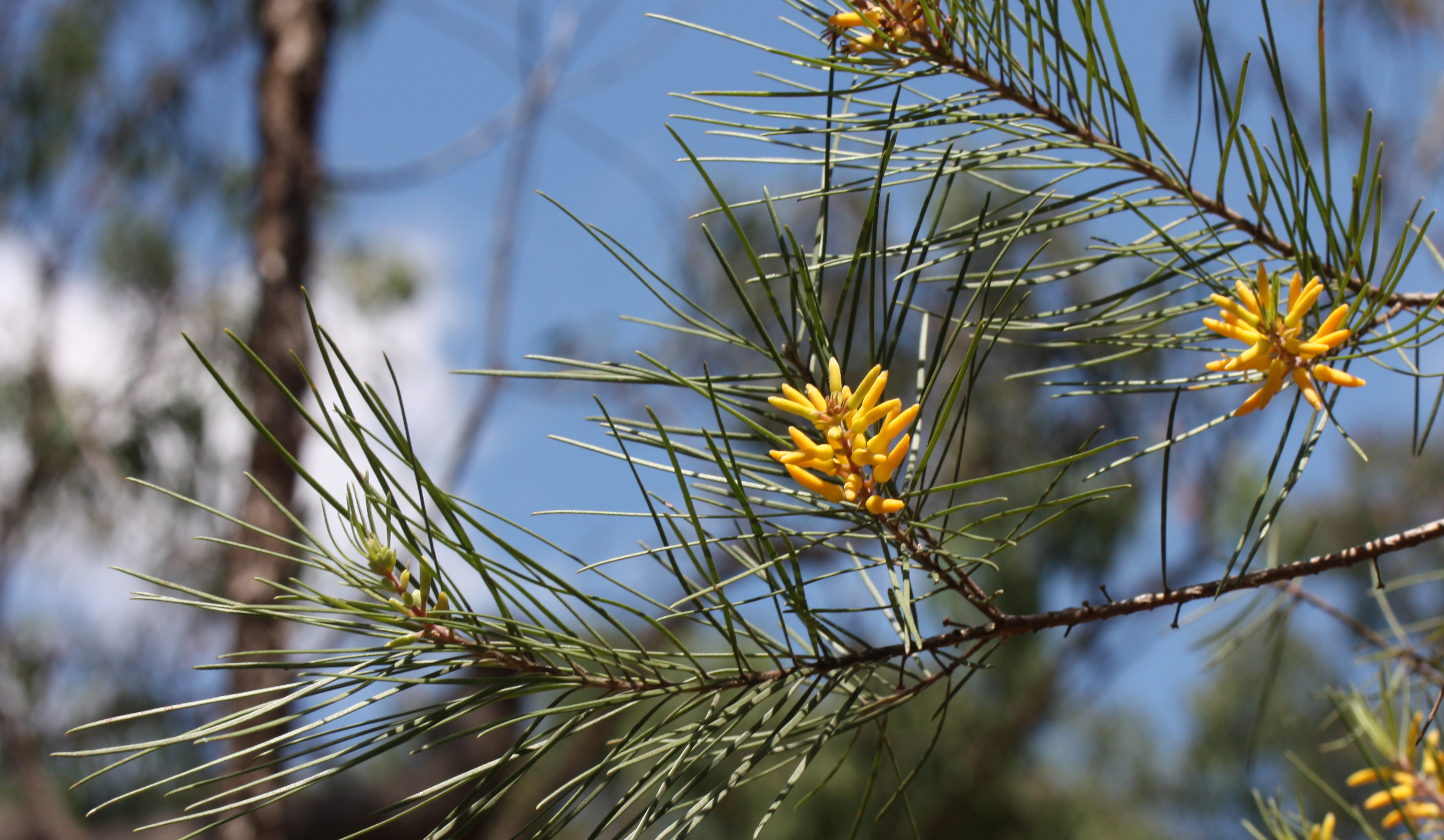
Prickly geebung
Persoonia juniperina
Catalog fields
- Genus
- Persoonia
- Photo
- Not recorded
- Edible
- Yes
- layout
- single
- Habitat
- Grows in heath to dry sclerophyll forest in siliceous soils, from sea level to 700 m alt.
- Published
- Yes
- Food group
- Fruit
- Latin name
- Persoonia juniperina
- Fruit photo
- Not recorded
- Plant title
- Prickly geebung
- Source URLs
- https://profiles.ala.org.au/opus/foa/profile/Persoonia%20juniperina | https://www.anbg.gov.au/apu/plants/persooni.html; https://plantnet.rbgsyd.nsw.gov.au/cgi-bin/NSWfl.pl?lvl=sp&name=Persoonia~juniperina&page=nswfl; https://vicflora.rbg.vic.gov.au/flora/taxon/b85f531c-d2c0-4334-852c-fa2bd461bc23 Open source ↗ Open source 2 ↗ Open source 3 ↗ Open source 4 ↗
- Catalogue ID
- CAT-00137
- Mature width
- Not confirmed; allow spread appropriate to growth habit
- Native range
- Occurs in south-eastern Australia from Adelaide, S.A., through southern Vic. to Green Cape in south-eastern N.S.W., and widespread in Tas.
- Plant family
- Proteaceae
- Supplier SKU
- Not recorded
- Listing group
- Regional / traditional food plant
- Mature height
- Up to about 2 m
- Native states
- NSW, SA, TAS, VIC
- Original list
- No
- Research date
- 10/10/2026
- Research notes
- Profile enriched from botanical/nursery sources. Dimensions are unpruned regional estimates where available; missing measurements remain explicit. Seasons are regional guides and vary with climate, location, cultivar and plant maturity. Drought and cultivation guidance are qualitative garden inferences, not measured ratings.
- Evidence status
- Published food use; preparation detail review pending
- Fruiting season
- Season not verified.
- Background photo
- Not recorded
- Edible component
- Soft ripe fruit flesh
- Flowering season
- December-February in VicFlora; regional timing varies.
- Brief description
- Small prickly heath shrub with narrow pointed leaves.
- Drought tolerance
- Moderate in suitable soil; avoid prolonged root-zone drying.
- Preparation notes
- Traditionally soft ripe pulp around stone; discard skin and stone.
- Flower description
- Small yellow tubular flowers, usually solitary in leaf axils.
- General cultivation
- General guidance (qualitative): Cooler-site specialist trial with drainage and low-phosphorus nutrition.
- Botanical description
- Erect to decumbent shrubs 0.3–2 m tall. Bark smooth. Hairs greyish, appressed to antrorsely spreading. Young branchlets sparsely to densely hairy. Leaves spreading to suberect, straight, linear, 8–35 mm long, 0.7–1.5 mm wide, concave, occasionally incurved, usually pungent, concolorous, not glaucous, glabrous to densely hairy when immature, glabrescent, smooth. Inflorescence auxotelic, 1–40-flowered; rachis 0–15 cm long. Flowers mostly subtended by leaves; pedicels 0.8–3 mm long, erect to spreading, moderately to densely hairy; tepals 6–11 mm long, apiculate to caudate, sparsely to moderately hairy on outside. Ovary glabrous; ovules 2.
- Other botanical names
- Not recorded
- Attracts birds and bugs
- Native bees and insects visit flowers; canopy shelters birds.
- Flora of Australia profile
- https://profiles.ala.org.au/opus/foa/profile/Persoonia%20juniperina Open source ↗
- Fruit type and description
- Small fleshy greenish drupes with fibrous pulp around a stone.
- Flora of Australia citation
- P.H. Weston. Persoonia juniperina. Flora of Australia, Australian Biological Resources Study, Department of Climate Change, Energy, the Environment and Water, Canberra. https://profiles.ala.org.au/opus/foa/profile/Persoonia%20juniperina (accessed 2026-10-15). Copyright Commonwealth of Australia; CC BY 4.0 (https://creativecommons.org/licenses/by/4.0/). HTML formatting removed; species-level context added where noted. Open source ↗ Open source 2 ↗
- Flora of Australia retrieved
- 15/10/2026