CAT-00146
Cluster fig
Ficus racemosa
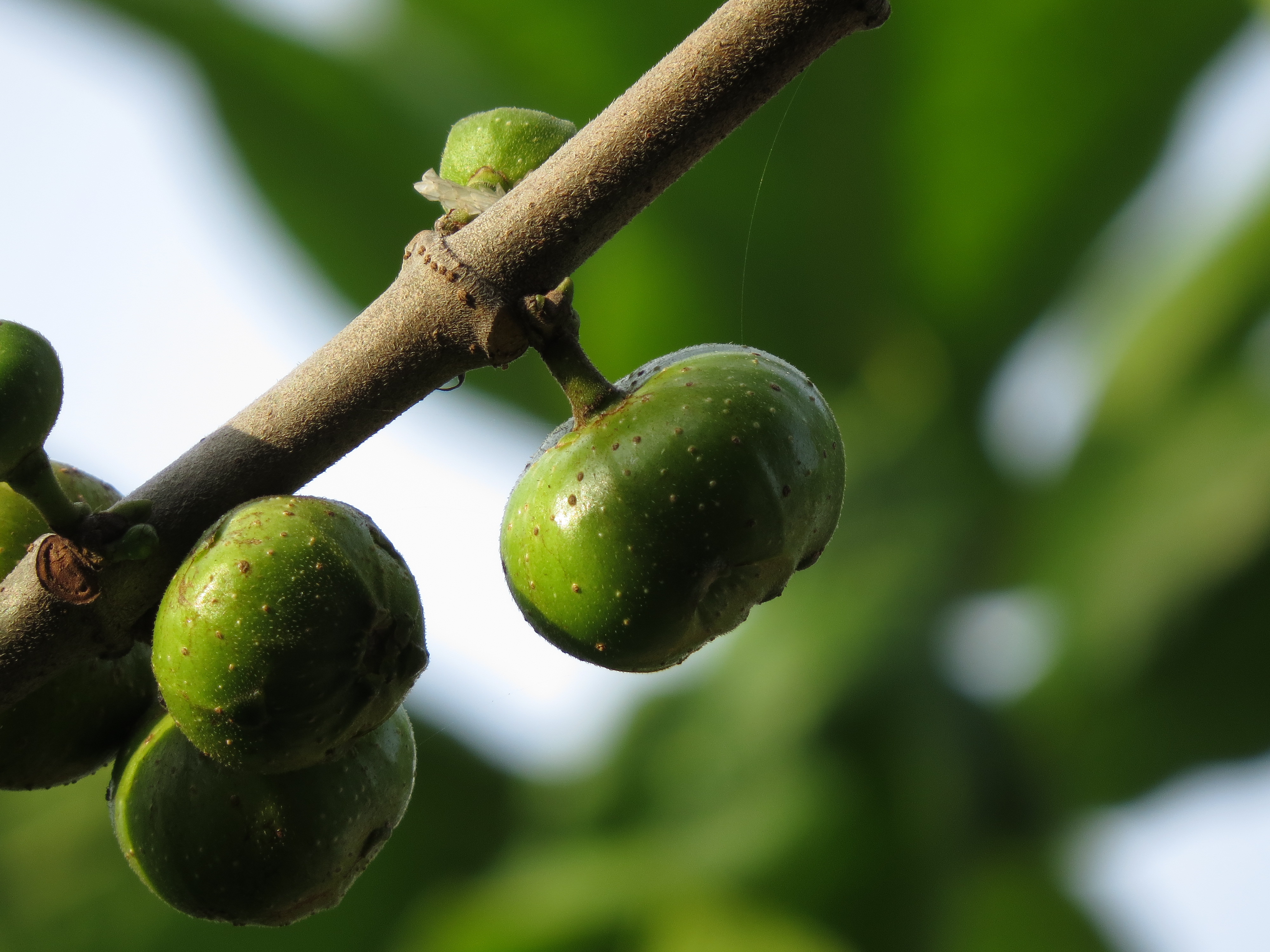
Catalog fields
- Genus
- Ficus
- Photo
- Not recorded
- Edible
- Yes
- layout
- single
- Habitat
- Frequently along watercourses, in various soil types. Rainforest, monsoon forest, dry rainforest, gallery forest, littoral rainforest (Cooper & Cooper 2004: 326, Zich et al. 2020). An important food source for a variety of animals, e.g. the fruit is eaten by many bird species and Spectacled Flying-foxes. Feral pigs are particularly fond of the fruit, and make tracks between the trees in Cape York. Host to the Two Brand Crow Butterfly in northern Australia.
- Published
- Yes
- Food group
- Fruit
- Latin name
- Ficus racemosa
- Fruit photo
- Not recorded
- Plant title
- Cluster fig
- Source URLs
- https://profiles.ala.org.au/opus/foa/profile/Ficus%20racemosa | https://www.anbg.gov.au/gardens/visiting/exploring/aboriginal-trail/; https://powo.science.kew.org/taxon/853540-1 Open source ↗ Open source 2 ↗ Open source 3 ↗
- Catalogue ID
- CAT-00146
- Mature width
- Not confirmed; allow spread appropriate to growth habit
- Native range
- Widely distributed from southern Asia to New Guinea; also in northern Australia.
- Plant family
- Moraceae
- Supplier SKU
- Not recorded
- Listing group
- Regional / traditional food plant
- Mature height
- Not confirmed; habit described in brief description
- Native states
- NT, QLD, WA
- Original list
- No
- Research date
- 10/10/2026
- Research notes
- Profile enriched from botanical/nursery sources. Dimensions are unpruned regional estimates where available; missing measurements remain explicit. Seasons are regional guides and vary with climate, location, cultivar and plant maturity. Drought and cultivation guidance are qualitative garden inferences, not measured ratings.
- Evidence status
- Published food use; preparation detail review pending
- Fruiting season
- Variable crops
- Background photo
- Not recorded
- Edible component
- Ripe figs
- Flowering season
- Flowers enclosed inside figs
- Brief description
- Large tropical fig with fruits clustered on trunk and large branches.
- Drought tolerance
- Moderate once established; creekside habitat favours moisture.
- Preparation notes
- Confirm species identification, the specified edible part, ripeness and species-specific preparation before use.
- Flower description
- Tiny flowers enclosed inside the fig; no conspicuous external flower display.
- General cultivation
- General guidance (qualitative): Large-property warm-site trial; roots need substantial clearance from structures.
- Botanical description
- Buttressed tree to 35 m high, often deciduous. Leaves alternate; lamina ovate, elliptic to narrowly elliptic, rarely oblong, (4.3–) 5–20 (–24.7) cm long, (1.9–) 3–9 (–11) cm wide, cuneate to subcordate at base, sometimes sinuate margin, obtuse to subacute or subacuminate at apex, coriaceous, lightly pubescent, soon glabrous; lateral veins 4–8 (–12) pairs, with 5–7 prominent intercostals; petiole (0.8–) 2–7 (–9.6) cm long; stipules persistent, 5–20 (–28) mm long, minutely hairy. Figs cauliflorous and ramiflorous, in clusters to 36 cm long, globular to pyriform, (1.5–) 3–4 cm diam., yellow to orange-red, often lenticellate-verrucose; ostiole closed by 5 or 6 apical bracts in a disc 2–3 mm diam.; internal bristles absent; basal bracts 3, to 2 mm long; peduncle to 12 mm long. Flowers sessile, with 3 or 4 irregular lobes; male flowers ostiolar, in 1 ring; female and gall flowers interspersed.
- Other botanical names
- Not recorded
- Attracts birds and bugs
- Native bees and insects visit flowers; canopy shelters birds.
- Flora of Australia profile
- https://profiles.ala.org.au/opus/foa/profile/Ficus%20racemosa Open source ↗
- Fruit type and description
- Clusters of red-orange figs enclosing numerous tiny fruits.
- Flora of Australia citation
- W.-L. Chew, P.G. Kodela. Ficus racemosa. Flora of Australia, Australian Biological Resources Study, Department of Climate Change, Energy, the Environment and Water, Canberra. https://profiles.ala.org.au/opus/foa/profile/Ficus%20racemosa (accessed 2026-10-15). Copyright Commonwealth of Australia; CC BY 4.0 (https://creativecommons.org/licenses/by/4.0/). HTML formatting removed; species-level context added where noted. Open source ↗ Open source 2 ↗
- Flora of Australia retrieved
- 15/10/2026