CAT-00147
Rock fig
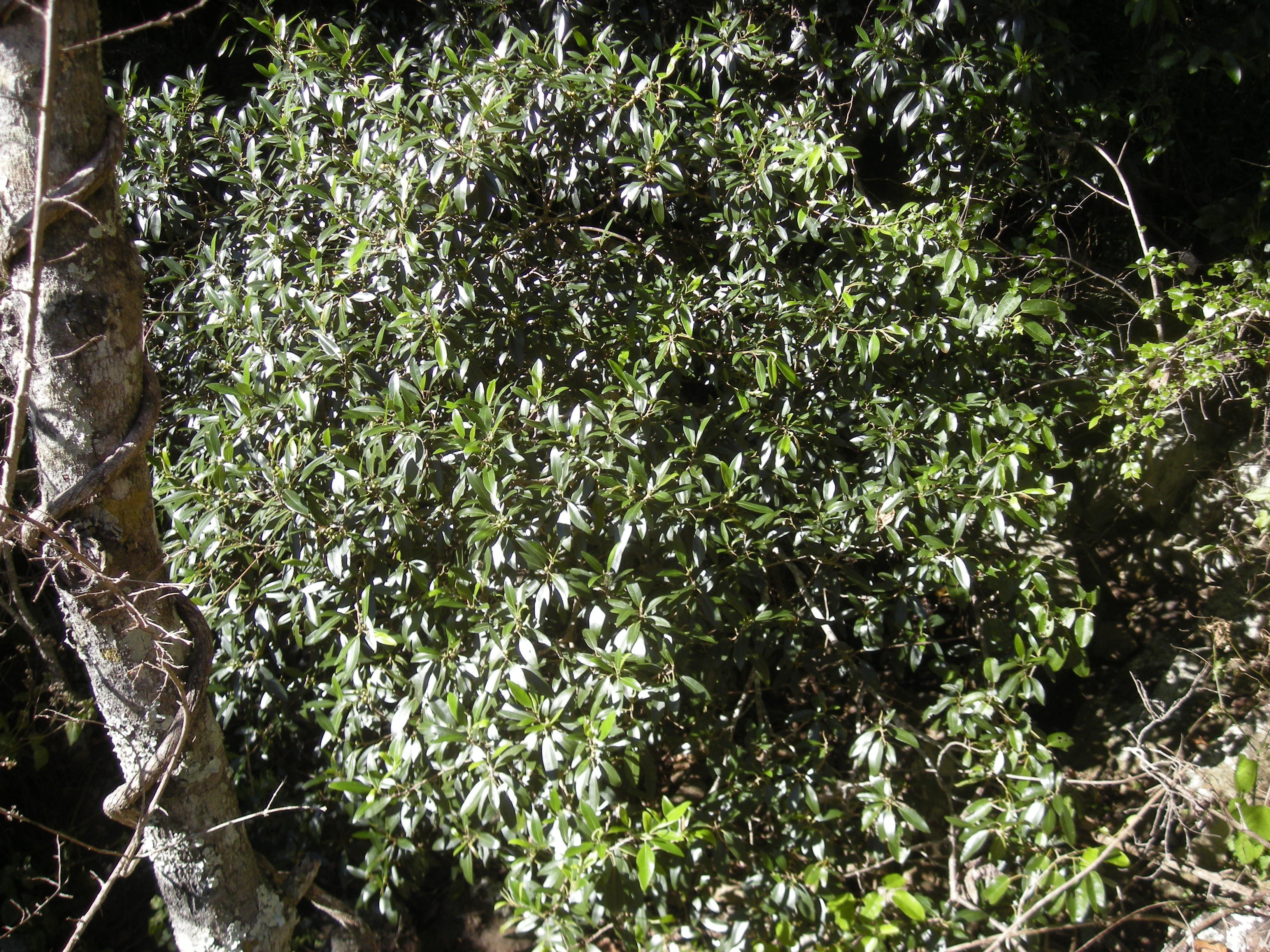
Ficus platypoda
Catalog fields
- Genus
- Ficus
- Photo
- Not recorded
- Edible
- Yes
- layout
- single
- Habitat
- Lithophytic species mostly restricted to sandstone outcrops but occasionally found on limestone (Dixon 2011: 16); grows in monsoon forest and dry scrub in rocky situations (Zich et al. 2020); sand, alluvium, loam, limestone, sandstone, granite; cliffs, hills, screes, uplands, granite rock pockets (W.A. FloraBase, accessed 12 January 2022).
- Published
- Yes
- Food group
- Fruit
- Latin name
- Ficus platypoda
- Fruit photo
- Not recorded
- Plant title
- Rock fig
- Source URLs
- https://profiles.ala.org.au/opus/foa/profile/Ficus%20platypoda | https://data.environment.sa.gov.au/Content/Publications/JABG14P001_Smith.pdf; https://powo.science.kew.org/taxon/853434-1 Open source ↗ Open source 2 ↗ Open source 3 ↗
- Catalogue ID
- CAT-00147
- Mature width
- Not confirmed; allow spread appropriate to growth habit
- Native range
- Western Australia, Northern Territory.
- Plant family
- Moraceae
- Supplier SKU
- Not recorded
- Listing group
- Regional / traditional food plant
- Mature height
- Not confirmed; habit described in brief description
- Native states
- NSW, NT, QLD, WA
- Original list
- No
- Research date
- 10/10/2026
- Research notes
- Profile enriched from botanical/nursery sources. Dimensions are unpruned regional estimates where available; missing measurements remain explicit. Seasons are regional guides and vary with climate, location, cultivar and plant maturity. Drought and cultivation guidance are qualitative garden inferences, not measured ratings.
- Evidence status
- Published food use; preparation detail review pending
- Fruiting season
- Early summer reported in historical inland account.
- Background photo
- Not recorded
- Edible component
- Ripe figs
- Flowering season
- Flowers enclosed inside figs.
- Brief description
- Rock-associated fig, varying from spreading shrub to tree.
- Drought tolerance
- Moderate to high once established with access to deep moisture.
- Preparation notes
- Confirm species identification, the specified edible part, ripeness and species-specific preparation before use.
- Flower description
- Tiny flowers enclosed inside the fig; no conspicuous external flower display.
- General cultivation
- General guidance (qualitative): Specialist dry-site trial; confirm current taxonomy and allow spreading roots.
- Botanical description
- Spreading shrub or tree to 6 m high. Leaves alternate; lamina broadly ovate to elliptic, 6–10 cm long, 1–7 cm wide, cuneate, rounded to cordate at base, acute at apex, usually glabrous; lateral veins 10–15 pairs, prominent to indistinct; petiole usually dorsiventrally flattened, 1–4 cm long; stipules small, soon glabrous. Figs globular, 1–1.5 cm diam., glabrous; ostiole often triradiate, slightly umbonate, diam. variable; basal bracts 3, small, soon glabrous; peduncle c. 1 cm long, glabrous to pubescent. Male and female flowers interspersed; tepals 3 or 4. Female flowers sessile. Male flowers shortly pedicellate to subsessile. [The above description of Ficus platypoda from Chew (1989: 45–46) requires revision to include F. leucotricha; also to remove any elements of F. platypoda var. angustata (= F. rubignosa), F. platypoda var. cordata (= F. atricha), F. platypoda var. lachnocaulos and var. minor (= F. brachypoda); for more current treatments see Dixon (2011); Zich et al., Ficus platypoda, in Australian Tropical Rainforest Plants Edn 8 (2020); Ficus platypoda, in FloraBase (accessed 12 January 2022); Ficus platypoda in FloraNT (accessed 12 January 2022) - Editor, 11 January 2022.] Description of F. leucotricha from Chew (1989: 43): Spreading tree to 10 m high, sometimes deciduous; most parts pubescent to velutinous. Leaves alternate; lamina ovate to elliptic, sometimes oblong to pentagonal, 8–13 cm long, 4–9 cm wide, broadly cuneate to rounded, often cordate at base, acute to obtuse, rarely acuminate at apex; lateral veins 10–13 pairs, prominent; petiole 1–2 cm long; stipules 5 cm long. Figs pedunculate or sessile, globular, to 2 cm diam. [1–1.6 cm diam. given in variety descriptions], pubescent to velutinous; ostiole slightly raised, 2 mm diam., often triradiate; basal bracts 2, to 1 cm long and wide [4–6 mm, 8–12 mm, to 10 mm given in variety descriptions], rarely to 1.5 cm; peduncle absent or to 3.5 cm long. Male flowers mainly ostiolar, mixed with female flowers, subsessile; tepals 3. Female flowers subsessile; tepals 4.
- Other botanical names
- Not recorded
- Attracts birds and bugs
- Native bees and insects visit flowers; canopy shelters birds.
- Flora of Australia profile
- https://profiles.ala.org.au/opus/foa/profile/Ficus%20platypoda Open source ↗
- Fruit type and description
- Small fleshy figs around 1 cm; correct species identity matters.
- Flora of Australia citation
- W.-L. Chew, P.G. Kodela. Ficus platypoda. Flora of Australia, Australian Biological Resources Study, Department of Climate Change, Energy, the Environment and Water, Canberra. https://profiles.ala.org.au/opus/foa/profile/Ficus%20platypoda (accessed 2026-10-15). Copyright Commonwealth of Australia; CC BY 4.0 (https://creativecommons.org/licenses/by/4.0/). HTML formatting removed; species-level context added where noted. Open source ↗ Open source 2 ↗
- Flora of Australia retrieved
- 15/10/2026