CAT-00037
Bolwarra
Eupomatia laurina
Catalog fields
- Genus
- Eupomatia
- Photo
- Not recorded
- Edible
- Yes
- layout
- single
- Habitat
- Found in various types of rainforest and in rainforest margins. Details on pollination biology may be found in Armstrong & Irvine (1990).
- Published
- Yes
- Food group
- Fruit
- Latin name
- Eupomatia laurina
- Fruit photo
- Not recorded
- Plant title
- Bolwarra
- Source URLs
- https://profiles.ala.org.au/opus/foa/profile/Eupomatia%20laurina | https://tuckerbush.com.au/bolwarra-eupomatia-laurina/; https://powo.science.kew.org/taxon/urn%3Alsid%3Aipni.org%3Anames%3A72995-1 Open source ↗ Open source 2 ↗ Open source 3 ↗
- Catalogue ID
- CAT-00037
- Mature width
- 2-3m
- Native range
- Occurs from the McIlwraith Range, Queensland, to near Orbost, Victoria. Also occurs in New Guinea.
- Plant family
- Eupomatiaceae
- Supplier SKU
- Not recorded
- Listing group
- Nursery-listed / regional edible
- Mature height
- 3-5m
- Native states
- NSW, QLD, VIC
- Original list
- No
- Research date
- 10/10/2026
- Research notes
- Profile enriched from botanical/nursery sources. Dimensions are unpruned regional estimates where available; missing measurements remain explicit. Seasons are regional guides and vary with climate, location, cultivar and plant maturity. Drought and cultivation guidance are qualitative garden inferences, not measured ratings.
- Evidence status
- Nursery food-use source; preparation detail review pending
- Fruiting season
- Winter reported by nursery.
- Background photo
- Not recorded
- Edible component
- Ripe fruit pulp
- Flowering season
- Summer.
- Brief description
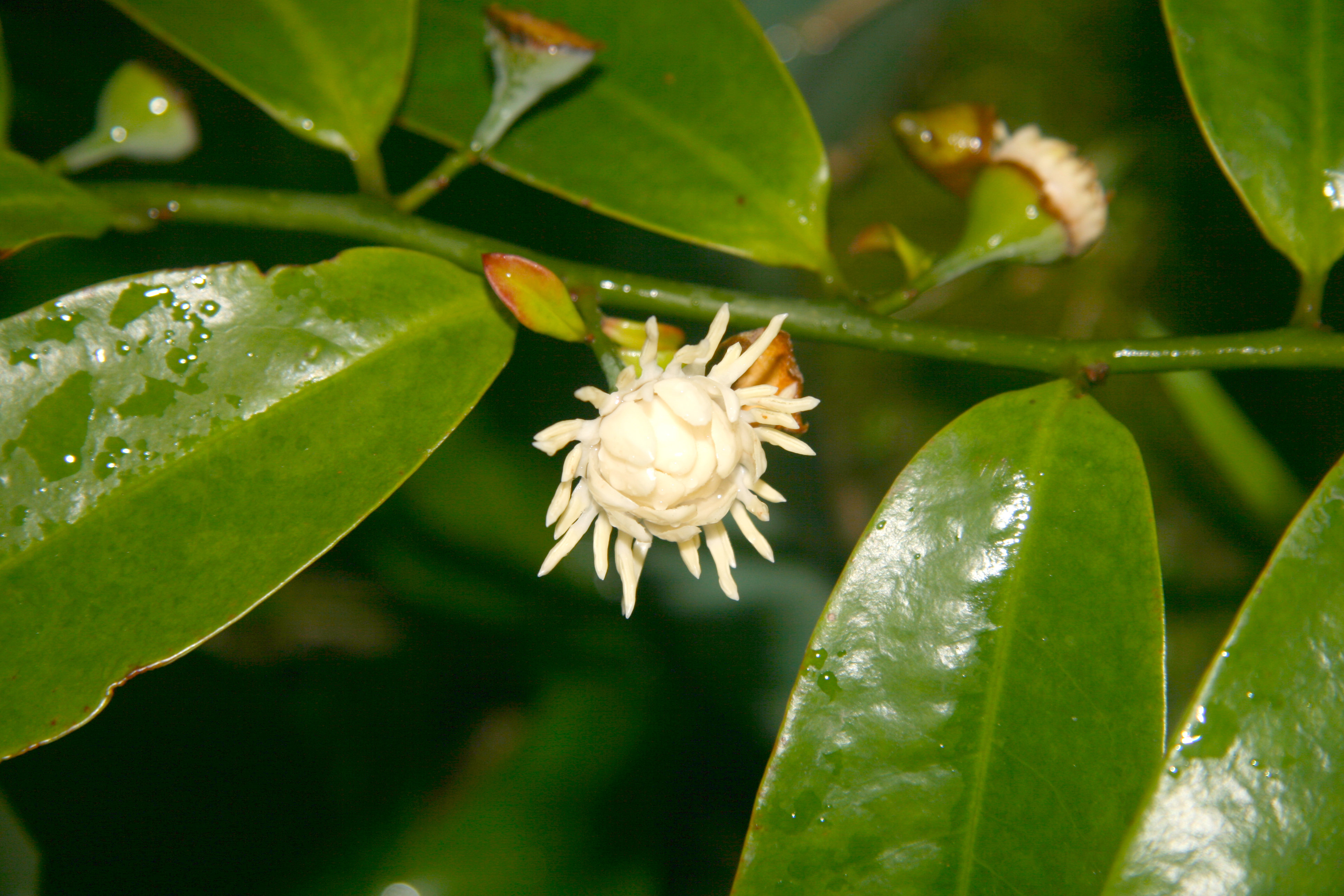
- Rainforest shrub or small tree with heavily scented cream flowers.
- Drought tolerance
- Low to moderate; water during dry spells.
- Preparation notes
- Use ripe soft aromatic pulp in preserves or flavouring; texture is seedy.
- Flower description
- Fragrant pale-cream flowers with a distinctive enclosing floral cup.
- General cultivation
- General guidance (qualitative): Promising in a sheltered, moist site; protect from frost and hot dry wind.
- Botanical description
- Shrub with long, arching branches, or small tree to 8 m high; not known to have tubers. Stem internodes terete. Leaves: petiole 5–10 mm long, not decurrent with stem; lamina obovate, oblong or elliptic, usually 6–18 cm long, 2–7 cm wide, acuminate, glabrous; base decurrent or acute; secondary veins usually 8–11 pairs with intersecondary veins. Flowers not forming well-circumscribed inflorescences, axillary; peduncle 6–15 mm long. Floral envelope cap hemispherical or slightly apiculate, abscissing by a circumferential fissure. Stamens oblong, broadened at base, glabrous, firstly reflexed during female phase, later erect during male phase, 6–12 mm long, 1 mm wide; anthers c. 4 mm long. Staminodes oblong, 5–10 mm long, 2–3 mm wide; margins pubescent; adaxial surface with irregular patches of hairs. Aggregate fruits urceolate, 1.5–5.5 cm diam., green to very pale orange-yellow.
- Other botanical names
- Not recorded
- Attracts birds and bugs
- Fruit-eating birds; native bees and flies pollinate.
- Flora of Australia profile
- https://profiles.ala.org.au/opus/foa/profile/Eupomatia%20laurina Open source ↗
- Fruit type and description
- Urn-shaped fruit to about 3 cm with aromatic sweet pulp and many seeds.
- Flora of Australia citation
- L.W. Jessup, P.G. Kodela. Eupomatia laurina. Flora of Australia, Australian Biological Resources Study, Department of Climate Change, Energy, the Environment and Water, Canberra. https://profiles.ala.org.au/opus/foa/profile/Eupomatia%20laurina (accessed 2026-10-14). Copyright Commonwealth of Australia; CC BY 4.0 (https://creativecommons.org/licenses/by/4.0/). HTML formatting removed; species-level context added where noted. Open source ↗ Open source 2 ↗
- Flora of Australia retrieved
- 14/10/2026