CAT-00038
Native mulberry
Pipturus argenteus
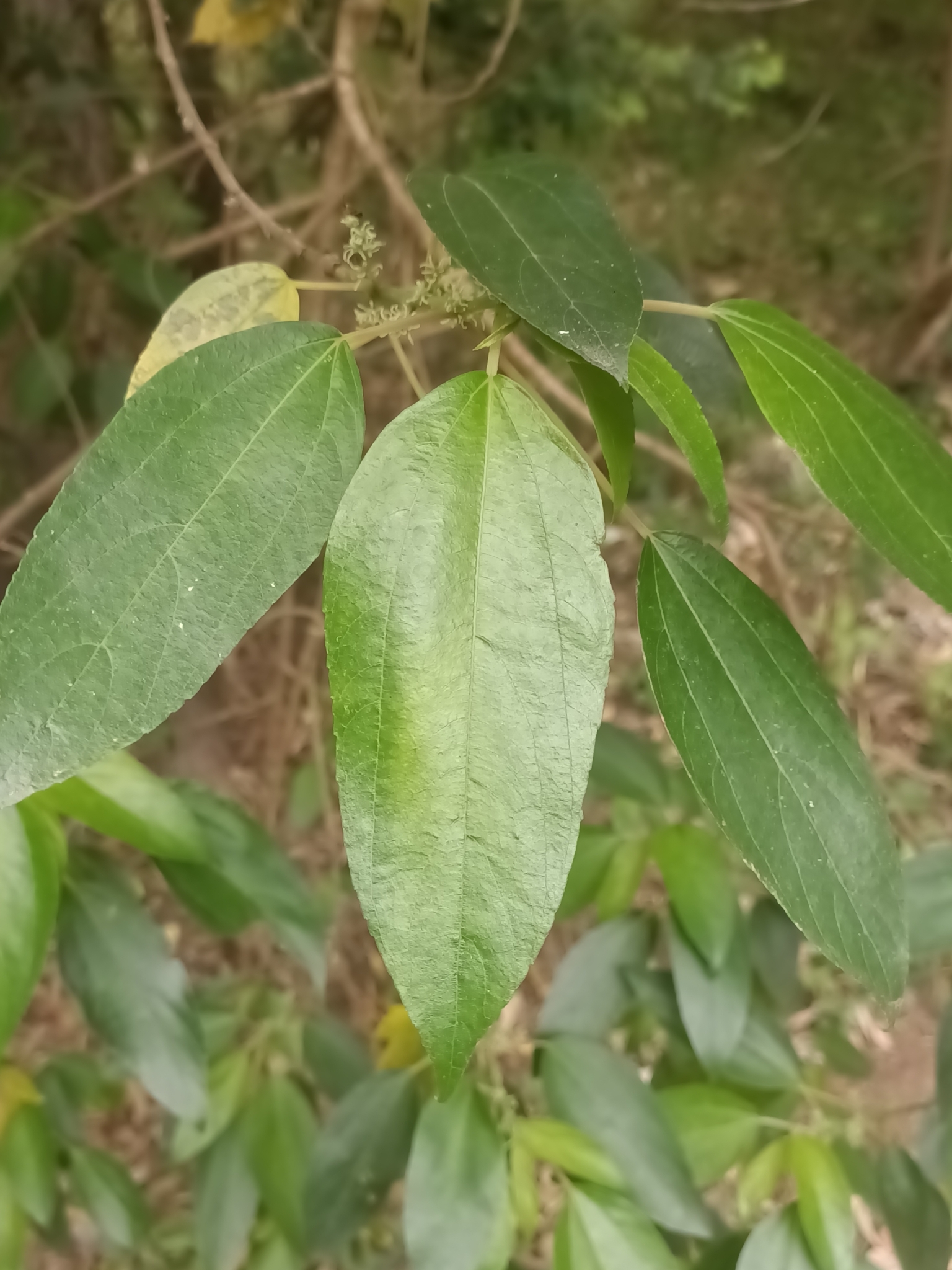
Catalog fields
- Genus
- Pipturus
- Photo
- Not recorded
- Edible
- Yes
- layout
- double
- Habitat
- Grows in open rainforest, especially as thickets in disturbed areas (e.g. regrowth after clearing), also wet sclerophyll forest and woodland. On Christmas Island common in marginal and open forest, along roads and tracks and on soil tips (Du Puy 1993). Host plant for many butterflies and other insects; see Save Our Waterways Inc. (2020). The fruits are eaten by birds.
- Published
- Yes
- Food group
- Fruit
- Latin name
- Pipturus argenteus
- Fruit photo
- Not recorded
- Plant title
- Native mulberry
- Source URLs
- https://profiles.ala.org.au/opus/foa/profile/Pipturus%20argenteus | https://tuckerbush.com.au/native-mulberry-pipturus-argenteus/; https://plantnet.rbgsyd.nsw.gov.au/cgi-bin/NSWfl.pl?lvl=sp&name=Pipturus~argenteus&page=nswfl Open source ↗ Open source 2 ↗ Open source 3 ↗
- Catalogue ID
- CAT-00038
- Mature width
- 3-5m
- Native range
- Occurs from Arnhem Land, Northern Territory, through eastern Queensland S to northeastern New South Wales, and on Christmas Island. Also in SE Asia and islands of the South Pacific.
- Plant family
- Urticaceae
- Supplier SKU
- Not recorded
- Listing group
- Nursery-listed / regional edible
- Mature height
- 3-8m
- Native states
- QLD
- Original list
- No
- Research date
- 10/10/2026
- Research notes
- Profile enriched from botanical/nursery sources. Dimensions are unpruned regional estimates where available; missing measurements remain explicit. Seasons are regional guides and vary with climate, location, cultivar and plant maturity. Drought and cultivation guidance are qualitative garden inferences, not measured ratings.
- Evidence status
- Nursery food-use source; preparation detail review pending
- Fruiting season
- May-July reported by nursery.
- Background photo
- Not recorded
- Edible component
- Ripe fruit
- Flowering season
- Summer in NSW flora; January-June reported by nursery.
- Brief description
- Soft-leaved rainforest pioneer shrub or small tree.
- Drought tolerance
- Low; sensitive to dry soil.
- Preparation notes
- Use soft ripe white fruit fresh; confirm a fruit-bearing female plant.
- Flower description
- Tiny flowers in separated rounded clusters on short spikes; male and female flowers on separate plants.
- General cultivation
- General guidance (qualitative): Suitable with irrigation and shelter; confirm female plant for fruit.
- Botanical description
- Dioecious shrub or tree to 10 m high. Branchlets strigose. Leaves alternate; lamina ovate, serrate or crenate, attenuate to acuminate apex, rounded (or shallowly cordate) at base, (3–) 8–15 (–18) cm long, (1–) 2–8.5 cm wide (larger leaves with lamina to 25 cm long recorded for Christmas Island), often glossy green above, densely strigose, densely white-woolly beneath (leaf indumentum is variable); cystoliths punctiform, dense; lateral veins 5–7 pairs, the basal prominent (3 strong veins from base); petiole mostly (2–) 5–12 cm long; stipules less than 3 mm long. Inflorescences unisexual, single to few, spicate, (1–) 4–9 cm long, ± as long as petiole; flowers c. 1 mm long, clustered at intervals, subsessile to sessile, densely strigose. Male flowers: tepals 4; stamens 4; pistillode present. Female flowers: perianth tubular, the orifice 3–5-dentate; style long. Fruiting clusters 4–8 mm across, translucent-white. Achenes enclosed by succulent perianth.
- Other botanical names
- Not recorded
- Attracts birds and bugs
- Fruit-eating birds; native bees and flies pollinate.
- Flora of Australia profile
- https://profiles.ala.org.au/opus/foa/profile/Pipturus%20argenteus Open source ↗
- Fruit type and description
- White aggregate fruit resembling a small mulberry; soft and sweet.
- Flora of Australia citation
- P.G. Kodela, W.-L. Chew. Pipturus argenteus. Flora of Australia, Australian Biological Resources Study, Department of Climate Change, Energy, the Environment and Water, Canberra. https://profiles.ala.org.au/opus/foa/profile/Pipturus%20argenteus (accessed 2026-10-14). Copyright Commonwealth of Australia; CC BY 4.0 (https://creativecommons.org/licenses/by/4.0/). HTML formatting removed; species-level context added where noted. Open source ↗ Open source 2 ↗
- Flora of Australia retrieved
- 14/10/2026