CAT-00079
Sea purslane
Sesuvium portulacastrum
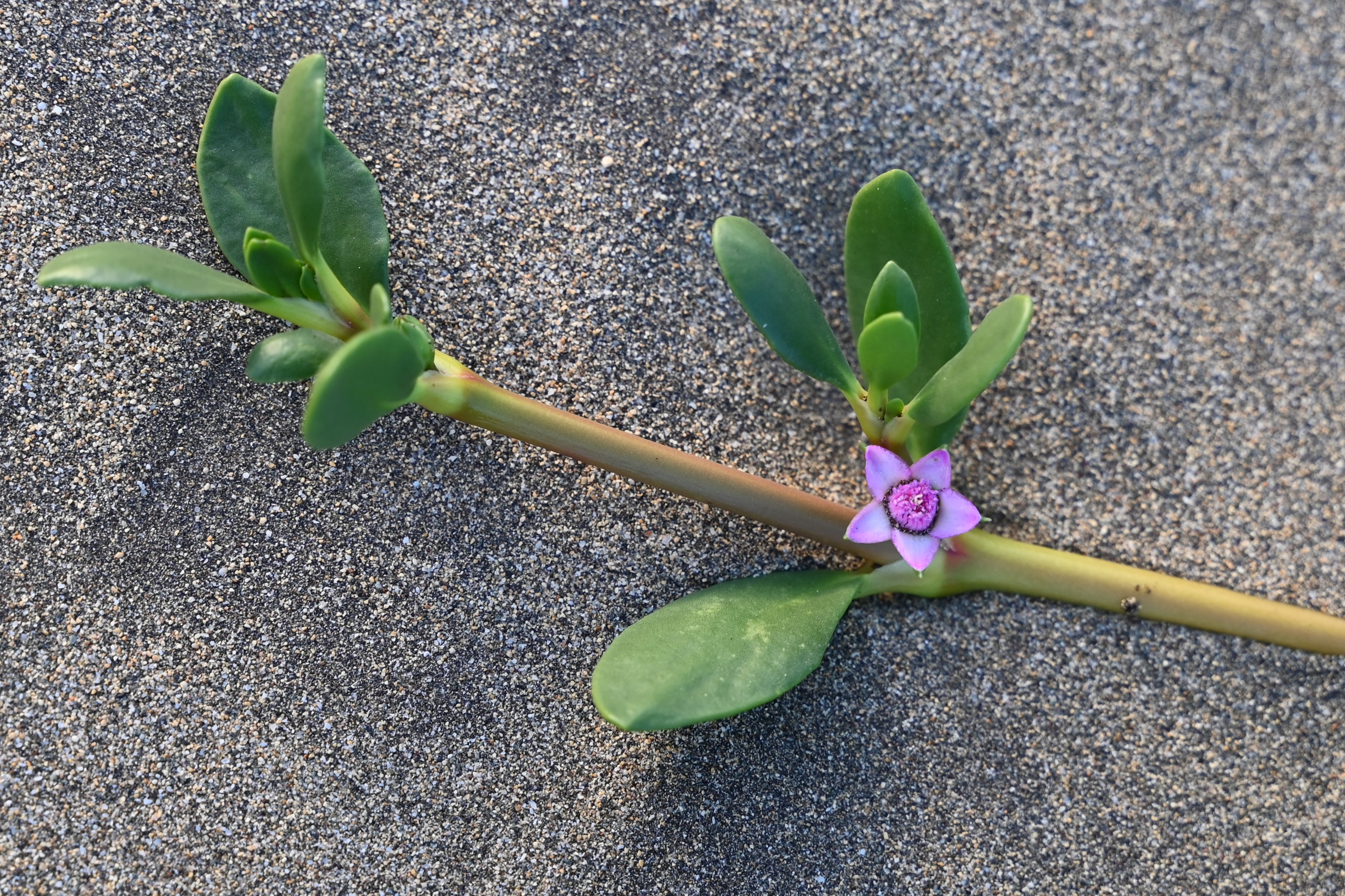
Catalog fields
- Genus
- Sesuvium
- Photo
- Not recorded
- Edible
- Yes
- layout
- single
- Habitat
- Found on mudflats or in sand (e.g. beach foredunes and strandline), often associated with mangroves.
- Published
- Yes
- Food group
- Leaf vegetable
- Latin name
- Sesuvium portulacastrum
- Fruit photo
- Not recorded
- Plant title
- Sea purslane
- Source URLs
- https://profiles.ala.org.au/opus/foa/profile/Sesuvium%20portulacastrum | https://tuckerbush.com.au/plants/vegetable-plants/; https://tuckerbush.com.au/sea-purslane-sesuvium-portulacastrum/; https://powo.science.kew.org/taxon/235145-2; https://florabase.dbca.wa.gov.au/browse/profile/2818 Open source ↗ Open source 2 ↗ Open source 3 ↗ Open source 4 ↗ Open source 5 ↗
- Catalogue ID
- CAT-00079
- Mature width
- 1-2m
- Native range
- Occurs along the northern coast and islands of Australia.
- Plant family
- Aizoaceae
- Supplier SKU
- Not recorded
- Listing group
- Nursery-listed / regional edible
- Mature height
- 30cm
- Native states
- NSW, NT, QLD, WA
- Original list
- No
- Research date
- 10/10/2026
- Research notes
- Profile enriched from botanical/nursery sources. Dimensions are unpruned regional estimates where available; missing measurements remain explicit. Seasons are regional guides and vary with climate, location, cultivar and plant maturity. Drought and cultivation guidance are qualitative garden inferences, not measured ratings.
- Evidence status
- Nursery food-use source; preparation detail review pending
- Fruiting season
- Capsules after flowering.
- Background photo
- Not recorded
- Edible component
- Leaves and shoots
- Flowering season
- March-December in WA flora; regional timing varies.
- Brief description
- Creeping salt-tolerant succulent with fleshy leaves.
- Drought tolerance
- Moderate to high; leaf crops benefit from moisture.
- Preparation notes
- Use correctly identified tender shoots, commonly briefly cooked or blanched.
- Flower description
- Small pink-purple flowers.
- General cultivation
- General guidance (qualitative): Promising warm-site groundcover with sun and drainage.
- Botanical description
- Suberect herb; stems to 1 m long, thick, smooth; nodes distant. Leaves linear, lanceolate or oblanceolate, connate at base, 10–70 mm long, 2–15 mm wide, smooth, fleshy, glossy green. Pedicels 3–15 mm long, thickening upwards. Perianth tube 3 mm long; lobes triangular, 6–9 mm long, with scarious margins, with a distinct fleshy dorsal mucro behind apex c. 1.5 mm long, green outside, pink to purple inside. Stamens numerous; filaments c. 6 mm long. Ovary ovoid; styles 3, c. 4 mm long; locules 3; ovules several per locule. Operculum subovoid, c. 8 mm long; smooth. Seeds several, pea-shaped to comma-shaped, c. 1.5 mm diam., smooth, black.
- Other botanical names
- Not recorded
- Attracts birds and bugs
- Native bees and insects visit flowers; canopy shelters birds.
- Flora of Australia profile
- https://profiles.ala.org.au/opus/foa/profile/Sesuvium%20portulacastrum Open source ↗
- Fruit type and description
- Small dry capsules; young succulent foliage is the food crop.
- Flora of Australia citation
- A. Prescott. Sesuvium portulacastrum. Flora of Australia, Australian Biological Resources Study, Department of Climate Change, Energy, the Environment and Water, Canberra. https://profiles.ala.org.au/opus/foa/profile/Sesuvium%20portulacastrum (accessed 2026-10-14). Copyright Commonwealth of Australia; CC BY 4.0 (https://creativecommons.org/licenses/by/4.0/). HTML formatting removed; species-level context added where noted. Open source ↗ Open source 2 ↗
- Flora of Australia retrieved
- 14/10/2026