CAT-00095
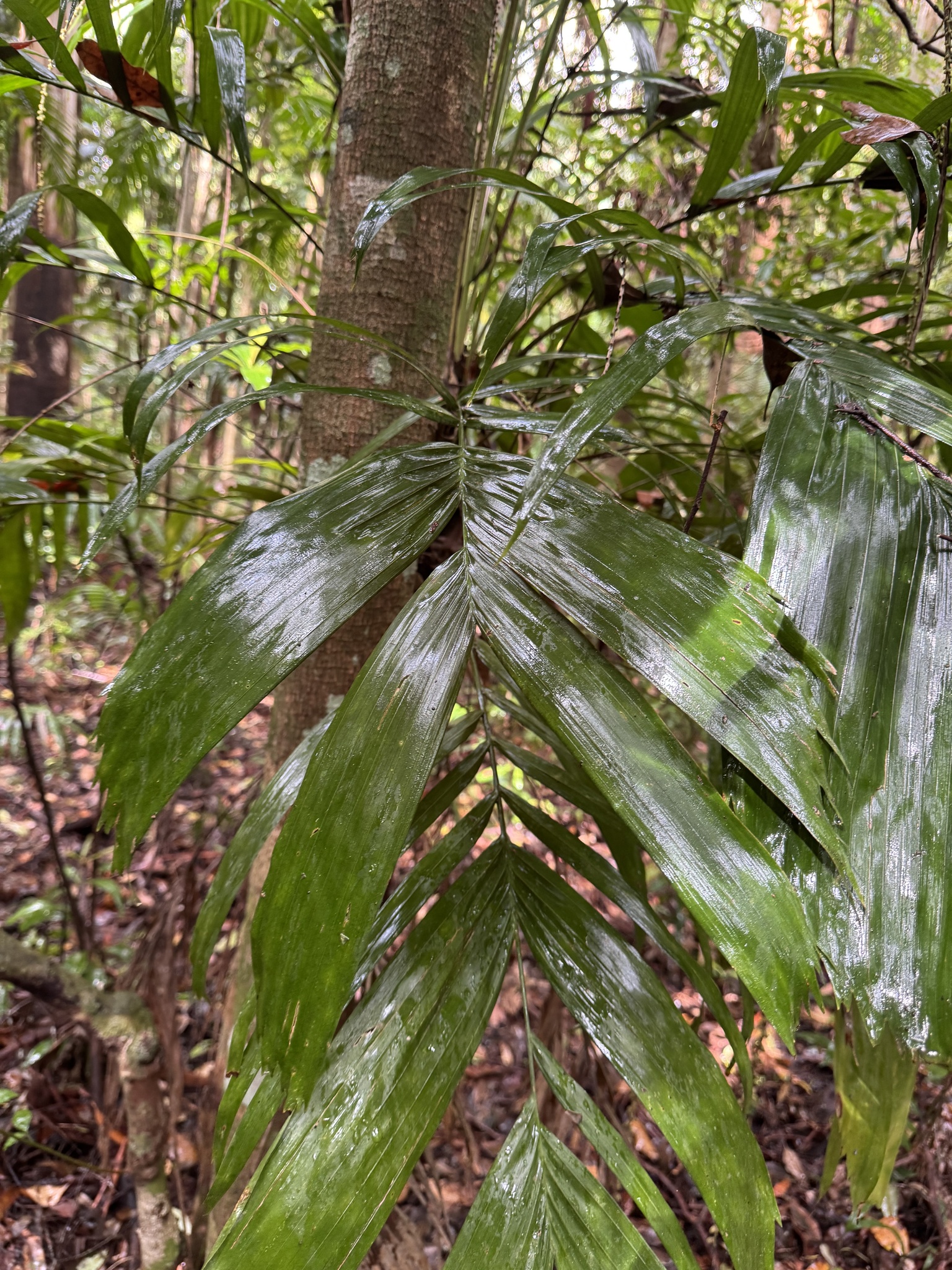
Walking-stick palm
Linospadix monostachyos
Catalog fields
- Genus
- Linospadix
- Photo
- Not recorded
- Edible
- Yes
- layout
- single
- Habitat
- Usually on basaltic soils, in rainforest, 0–1200 m alt.
- Published
- Yes
- Food group
- Fruit
- Latin name
- Linospadix monostachyos
- Fruit photo
- Not recorded
- Plant title
- Walking-stick palm
- Source URLs
- https://profiles.ala.org.au/opus/foa/profile/Linospadix%20monostachyos | https://www.daleysfruit.com.au/bushfoodintro.htm; https://plantnet.rbgsyd.nsw.gov.au/cgi-bin/NSWfl.pl?lvl=sp&name=Linospadix~monostachyos&page=nswfl Open source ↗ Open source 2 ↗ Open source 3 ↗
- Catalogue ID
- CAT-00095
- Mature width
- Not confirmed; allow spread appropriate to growth habit
- Native range
- Endemic to S Qld and northern N.S.W., from near Gympie to Taree.
- Plant family
- Arecaceae
- Supplier SKU
- Not recorded
- Listing group
- Nursery-listed / regional edible
- Mature height
- Usually 1.3-2 m; occasionally 5 m
- Native states
- NSW, QLD
- Original list
- No
- Research date
- 10/10/2026
- Research notes
- Source is a nursery catalogue overview; detailed species verification remains. Profile enriched from botanical/nursery sources. Dimensions are unpruned regional estimates where available; missing measurements remain explicit. Seasons are regional guides and vary with climate, location, cultivar and plant maturity. Drought and cultivation guidance are qualitative garden inferences, not measured ratings.
- Evidence status
- Nursery food-use listing; species detail review pending
- Fruiting season
- Fruits follow flowering
- Background photo
- Not recorded
- Edible component
- Thin ripe fruit flesh
- Flowering season
- Can flower throughout year.
- Brief description
- Small slender rainforest palm with pendulous flower spikes.
- Drought tolerance
- Low; maintain a moist cool root zone.
- Preparation notes
- Confirm species identification, the specified edible part, ripeness and species-specific preparation before use.
- Flower description
- Tiny flowers along long hanging spikes; both male and female flowers occur in the inflorescence.
- General cultivation
- General guidance (qualitative): Promising shaded irrigated understorey plant.
- Botanical description
- Solitary palm to 2–6 m tall; stem to 5 cm diam. Leaves 5–10, to 130 cm long, irregularly or regularly pinnate; leaf sheath green, moderately fibrous on margins; petiole 24–80 cm long. Pinnae 5–15 each side of rachis, single or united, lax, to 30 cm long, 5–200 mm wide, glossy mid to dark green adaxially, lighter green abaxially; veins raised on both surfaces. Inflorescence to 100 cm long; peduncle to 60 cm long; rachis to 50 cm long. Staminate flowers asymmetric, angled to pyramidal in bud, to 13 mm long; perianth green; stamens 8–12, with connective extending beyond anther. Fruit globose to ovoid to elongate to cylindric, 12–15 mm long, 5–10 mm wide, red.
- Other botanical names
- Not recorded
- Attracts birds and bugs
- Native bees and insects visit flowers; canopy shelters birds.
- Flora of Australia profile
- https://profiles.ala.org.au/opus/foa/profile/Linospadix%20monostachyos Open source ↗
- Fruit type and description
- Small red fruits approximately 10-12 mm.
- Flora of Australia citation
- J.L.Dowe, D.L.Jones. Linospadix monostachyos. Flora of Australia, Australian Biological Resources Study, Department of Climate Change, Energy, the Environment and Water, Canberra. https://profiles.ala.org.au/opus/foa/profile/Linospadix%20monostachyos (accessed 2026-10-14). Copyright Commonwealth of Australia; CC BY 4.0 (https://creativecommons.org/licenses/by/4.0/). HTML formatting removed; species-level context added where noted. Open source ↗ Open source 2 ↗
- Flora of Australia retrieved
- 14/10/2026