CAT-00121
Weeping grass
Microlaena stipoides
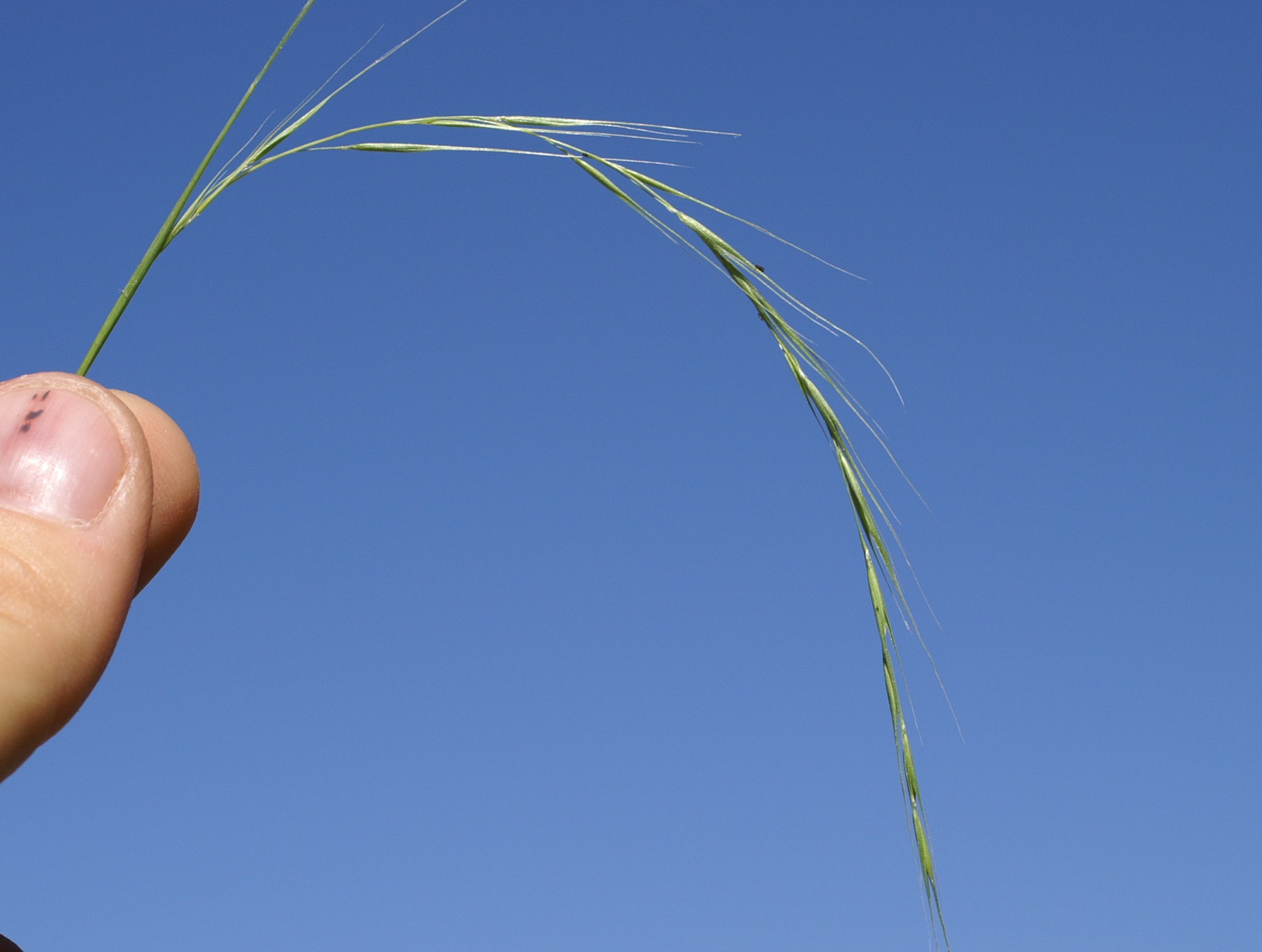
Catalog fields
- Genus
- Microlaena
- Photo
- Not recorded
- Edible
- Yes
- layout
- single
- Habitat
- Usually grows in damp, shady areas.
- Published
- Yes
- Food group
- Grain
- Latin name
- Microlaena stipoides
- Fruit photo
- Not recorded
- Plant title
- Weeping grass
- Source URLs
- https://profiles.ala.org.au/opus/foa/profile/Microlaena%20stipoides | https://pmc.ncbi.nlm.nih.gov/articles/PMC10660417/; https://plantnet.rbgsyd.nsw.gov.au/cgi-bin/NSWfl.pl?lvl=sp&name=Microlaena~stipoides&page=nswfl Open source ↗ Open source 2 ↗ Open source 3 ↗
- Catalogue ID
- CAT-00121
- Mature width
- Not confirmed; allow spread appropriate to growth habit
- Native range
- Occurs in all Australian States and Territories except the Northern Territory. Occurs in the southwest corner of Western Australia and from southeast South Australia through southern Victoria, much of Tasmania, mostly eastern areas in New South Wales and in generally coastal areas of Queensland, north to about Cairns. Extends to Lord Howe Island, Norfolk Island, New Zealand, New Guinea and the Philippines.
- Plant family
- Poaceae
- Supplier SKU
- Not recorded
- Listing group
- Regional / traditional food plant
- Mature height
- Up to 0.7 m
- Native states
- NSW, NT, QLD, SA, TAS, VIC, WA
- Original list
- No
- Research date
- 10/10/2026
- Research notes
- Profile enriched from botanical/nursery sources. Dimensions are unpruned regional estimates where available; missing measurements remain explicit. Seasons are regional guides and vary with climate, location, cultivar and plant maturity. Drought and cultivation guidance are qualitative garden inferences, not measured ratings.
- Evidence status
- Published food use; preparation detail review pending
- Fruiting season
- After flowering.
- Background photo
- Not recorded
- Edible component
- Processed grain
- Flowering season
- Much of the year.
- Brief description
- Fine-leaved perennial grass with drooping seed heads.
- Drought tolerance
- Moderate once established; greener with moisture.
- Preparation notes
- Clean and process mature grain; milling and cooking methods require species-specific confirmation.
- Flower description
- Tiny grass flowers on delicate, drooping panicles.
- General cultivation
- General guidance (qualitative): Promising in light shade or sun with some water; clean and process grain.
- Botanical description
- Plants with horizontal or ascending rhizome, erect or decumbent or ascending. Culms 30–75 cm high. Leaves auriculate with auricular setae or non-auriculate; ligule 0.3–0.5 mm long, ciliolate; blade flat or involute, usually short, 2.5–25 cm long, 2–8 mm wide, abaxially glabrous or scabrous to hirsute. Inflorescences paniculate or racemose, 7–19 cm long. Spikelets 15–50 mm long; rachilla slightly elongated between glumes. Glumes equal to unequal; lower glume 0.3–3.8 mm long, keeled; upper glume 0.3–3.7 mm long, acute, veinless or 1-veined. Sterile florets: lemmas with veins distinctly raised, glabrous or scabrous; lemma awns shorter than lemma body to more than twice body length, 6–30 mm long; lower lemma stipitate, bearded at base; upper lemma 8–15 mm long. Bisexual floret: lemma 5.5–11 mm long, 5–7-veined, glabrous or scabrous; palea keeled, veinless or 1-veined, with veins glabrous or scabrous; stamens (2–) 4 (–6).
- Other botanical names
- Not recorded
- Attracts birds and bugs
- Native bees and insects visit flowers; canopy shelters birds.
- Flora of Australia profile
- https://profiles.ala.org.au/opus/foa/profile/Microlaena%20stipoides Open source ↗
- Fruit type and description
- Dry grains in small spikelets.
- Flora of Australia citation
- C.M. Weiller. Microlaena stipoides. Flora of Australia, Australian Biological Resources Study, Department of Climate Change, Energy, the Environment and Water, Canberra. https://profiles.ala.org.au/opus/foa/profile/Microlaena%20stipoides (accessed 2026-10-15). Copyright Commonwealth of Australia; CC BY 4.0 (https://creativecommons.org/licenses/by/4.0/). HTML formatting removed; species-level context added where noted. Open source ↗ Open source 2 ↗
- Flora of Australia retrieved
- 15/10/2026